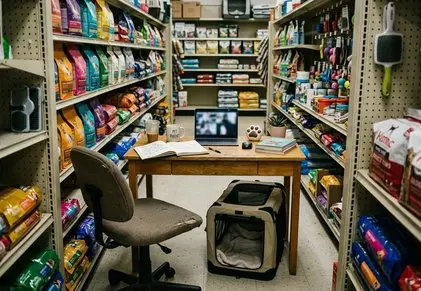
Pet Parent Wellbeing
Mental health, mindfulness, and steadier self-talk for guardians who love their dogs deeply and still get overwhelmed.
Explore wellbeingYour dog lunges, freezes, or melts down, and somehow you're the one left shaking and second-guessing every choice. The spiral of guilt, exhaustion, and "am I failing my dog?" rarely gets talked about. This is the space where your mental health matters as much as your dog's training does.
Find Your Starting Point
Some days, progress looks like a loose leash and a soft check-in. Other days, it looks like noticing your own shoulders creeping toward your ears and choosing to pause before the next walk. Both count.

Karoline Edmonds built this space around a simple field truth: dogs do not learn well when their people are running on shame, panic, or impossible expectations. Here, training plans sit next to journaling prompts. Reactive-dog support sits next to pet-parent mental health. Play matters. Rest matters. Your confidence matters, too.
If you are new here, pick one tiny thing to track this week: your dog’s recovery time after a trigger, your own stress level before walks, or one enrichment activity that actually helped. The pattern usually teaches more than a perfect plan.
Use these paths like a menu, not a checklist. Most dog moms move between them depending on the week, the weather, the dog, and their own nervous system.
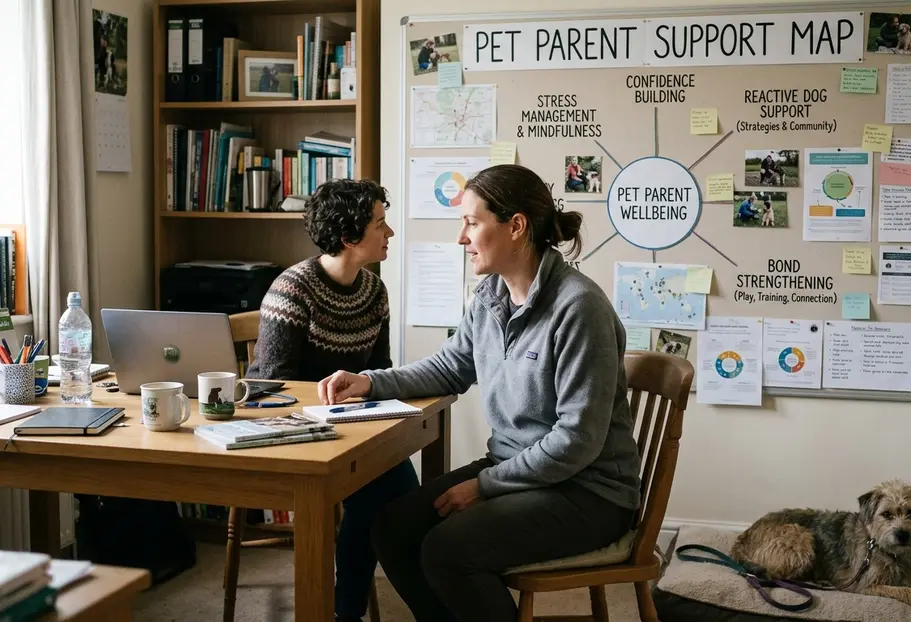
Mental health, mindfulness, and steadier self-talk for guardians who love their dogs deeply and still get overwhelmed.
Explore wellbeing
Gentle, realistic help for barking, lunging, fear, big feelings, and the human emotions that come with them.
Support my reactive dog
Early routines, bonding, decompression, and expectation-setting for the first stretch of life together.
Start the first steps
Relationship-based training, enrichment ideas, and play routines that make learning feel doable.
Build playful skills
Conversations about dog life, mental health, training confidence, and the messy middle of pet parenthood.
Listen in
Prompts and reflection tools for noticing change before it feels obvious.
Use the resourcesThe most useful routines are boring in the best way: repeatable, kind, and small enough to do on a tired Tuesday.
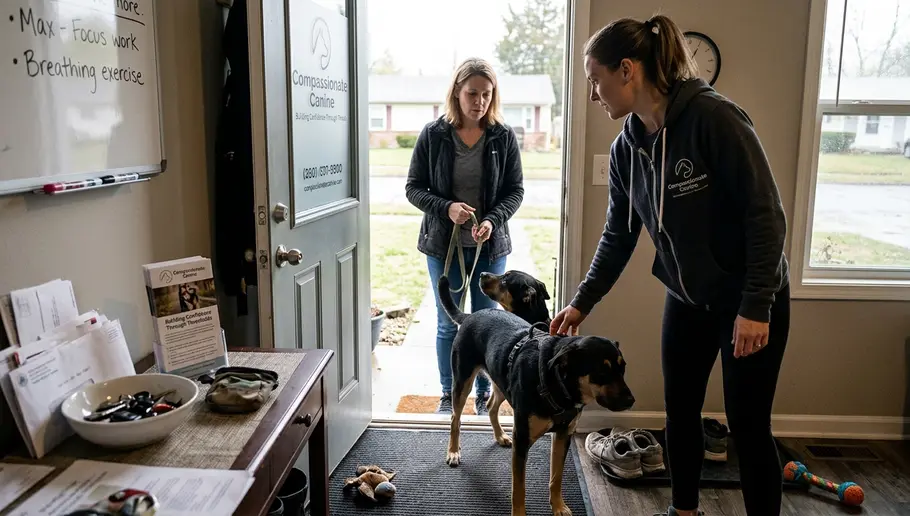
For dogs who react at windows, on leash, or around visitors, the goal is not to prove bravery. It is to create enough safety that learning can happen. If you are working at home, the guide on starting counter-conditioning with a reactive dog is a good next read.

They wait for a crisis before making the task easier. They compare their dog to the calm golden retriever down the street. They treat one hard walk as proof they are failing.
None of that helps. A better question is, “What would make the next repetition less loaded?” Sometimes the answer is distance. Sometimes it is a harness check. Sometimes it is going home and trying again after dinner.
If your dog has a sudden behavior change, pain signs, bite history, or escalating panic, bring in your veterinarian or a qualified local behavior professional. Online guidance can support the work, but it cannot see your dog’s full context.
If tracking helps you stay grounded, pair training notes with the Growing & Heeling Journal approach. Keep it plain. What happened? What helped? What will you repeat?
Dogmommentality brings together voices from pet-parent wellbeing, behavior consulting, enrichment, training, and podcast storytelling. The work stays practical because the real world is practical: apartment hallways, surprise off-leash dogs, busy workdays, and that one toy your dog only wants at 10 p.m.


Aaron Caldwell, Elena Ruiz, Søren Madsen, Julien Baptiste, and Maya Thompson contribute experience across reactive-dog behavior, tracking progress, enrichment planning, arousal systems, and real-world training confidence.
Dr. Rachel Monroe focuses on caregiver confidence, human-dog attachment, and the emotional load that often hides behind “my dog is having a hard time.”
You do not need to become a flawless trainer to become a steadier dog parent. Start with one routine, one reflection, and one kinder way to talk to yourself after a hard day.
Build a simple enrichment routine Set realistic first-month expectations
Find subjects that spark your curiosity.
Write thorough, well-sourced material.
Connect with readers seeking these answers.