
Quick Nav: What enrichment really means, the five categories to cover, a step-by-step routine, sample schedules, signs your dog needs a change, and how to keep this gentle enough for real life.
What Dog Enrichment Actually Means (and Why It Matters)
A tired dog is not automatically an enriched dog.
That line matters because many guardians arrive at enrichment after a hard season: the shredded couch arm, the barking at every hallway sound, the evening zoomies that feel less funny when everyone is already depleted. The usual advice says, “exercise more.” Sometimes movement helps. Sometimes it just builds a fitter dog who still has unmet needs.
Enrichment means giving a dog regular access to species-typical behaviors: sniffing, chewing, licking, foraging, problem-solving, resting, moving, and making safe choices. As canine behavior frameworks shifted around 2022, many trainers began talking about enrichment less as entertainment and more as welfare support. That framing is kinder to the dog and to the person holding the leash.
For a reactive dog, enrichment may lower the daily frustration load without forcing more exposure to triggers. For an anxious guardian, it can replace the constant question of “Am I doing enough?” with a small, visible plan.
The ASPCA guidance on canine enrichment also frames enrichment as a way to support natural behavior, not simply to keep a dog occupied.
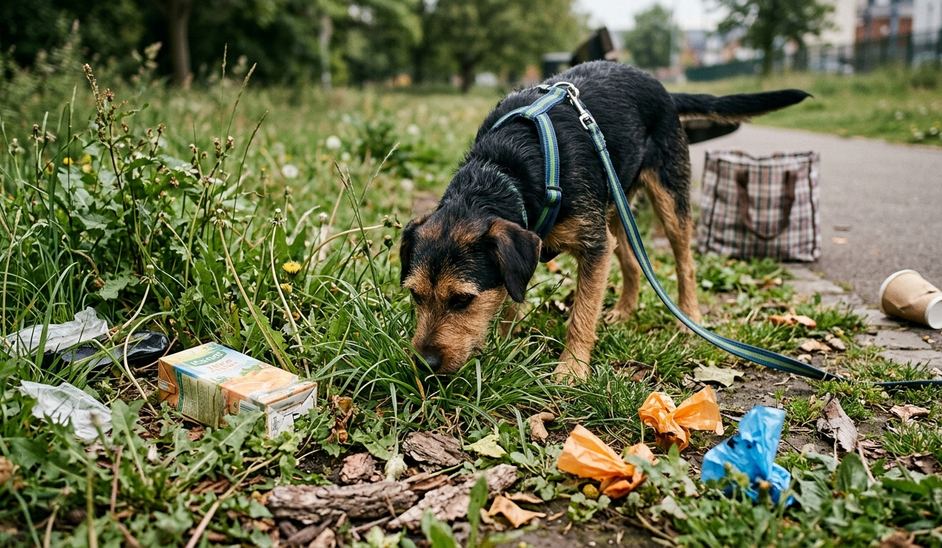
Key Takeaway: Enrichment is not a bonus activity. It is a daily way to meet your dog’s needs without turning your whole life into a training project.
A field note from ordinary homes
One guardian, living with a young spaniel mix in a noisy apartment building, had been adding longer walks each week. The dog came home more athletic, then barked harder at the elevator. The useful change was not more miles. It was a quieter morning: breakfast scattered in a towel, a short sniff walk away from the lobby, and a chew after the school-run noise passed.
That is the heart of this work. The routine should fit the nervous system in front of you.
The Five Categories Every Routine Should Cover
A good enrichment plan does not need a color-coded spreadsheet. It needs enough variety that one need does not get mistaken for all needs.
Chewing and licking could be split into separate boxes, but that often makes the plan feel heavier than it needs to be. In practice, it is easier to group them under decompression: the category for slow, repetitive, settling behaviors.
1. Sensory enrichment
Sensory work gives a dog safe information to investigate. Sniffing is the obvious one, but texture, sound, temperature, and novelty matter too. A snuffle mat, a cardboard box with crumpled paper, a towel trail of kibble, or a walk where the dog chooses the sniff spots can all count.
For many dogs, about 15 to 20 minutes of continuous sniffing is a substantial activity. It can look boring to humans. That is often a sign it is doing its job.
2. Cognitive enrichment
Cognitive work asks the dog to think. Puzzle feeders, simple shaping games, “find it,” and problem-solving setups belong here. The trick is to keep the task winnable. A puzzle that creates frantic pawing and whining is not enrichment for that dog on that day.
3. Physical enrichment
Physical enrichment is not the same as running a dog into the ground. It includes structured walks, tug with rules, flirt pole games with breaks, swimming where appropriate, gentle climbing for confident bodies, and age-appropriate movement.
Puppies, seniors, and dogs with pain histories need special care here. The goal is useful movement, not proof of toughness.
4. Decompression enrichment
This category covers chewing, licking, slow foraging, and settling rituals. Think frozen food toys, safe chews, lick mats, or a simple scatter feed in a quiet room. Decompression is especially useful after visitors, vet visits, grooming, storms, or hard walks.
5. Social and choice-based enrichment
Some dogs find dog parks enriching. Many do not. Social enrichment can mean sitting near a trusted person, sniffing where another dog has passed, watching the world from a distance, or playing with a familiar dog in a fenced yard.
Choice matters here. A dog who can move away, pause, sniff, or opt out is getting a different experience than a dog pulled into contact because humans think “friendly” is the only successful outcome.
Warning: Assuming a frustrated greeter needs more dog park time can rehearse over-arousal instead of providing healthy social enrichment.
How to Build the Routine, Step by Step
This is where many plans collapse: they ask a tired person to become a camp counselor before breakfast. Start smaller.
Step 1: Observe your dog’s current baseline
For three ordinary days, notice patterns without trying to fix everything. When does your dog pace? What triggers barking? Which activities make them softer afterward? What do they gravitate toward when they have a choice: sniffing, tug, chewing, looking out the window, following you from room to room?
Write short notes if that helps. Not a diary. Just enough to see the shape of the day.
Step 2: Anchor enrichment to existing daily rhythms
The routine should attach to things already happening: morning coffee, meals, bathroom breaks, lunch, the after-work transition, or evening wind-down. This prevents enrichment from becoming another floating obligation.
A breakfast puzzle works because the dog already needs breakfast. A two-minute scatter feed before a meeting works because you already know the meeting is coming. A chew after the last potty break works because the house is already shifting toward sleep.
Step 3: Start small and rotate weekly
Choose one simple activity from each category. Keep most activities to about 3 to 5 minutes at first, especially if your dog ramps up easily. Rotate puzzle toys every few days so novelty stays fresh without creating a daily shopping habit.
- Sensory: Scatter breakfast in the grass or in a towel.
- Cognitive: Play three short rounds of “find it” with treats.
- Physical: Add a structured tug game with a clear start and finish.
- Decompression: Offer a lick mat or safe chew after a busy moment.
- Social/choice: Let the dog choose the direction for part of a quiet walk.
If your dog gets frantic, make the task easier. If they disengage, make it shorter or switch categories. In practice, the most sustainable plans are rarely the fanciest ones; they are the ones that still happen on a damp Tuesday.
Sample Daily Schedules for Different Lifestyles
Breed can inform a plan, but capacity should shape it. A guardian working full-time with a migraine does not need the same schedule as someone with a free Saturday and a fenced field.
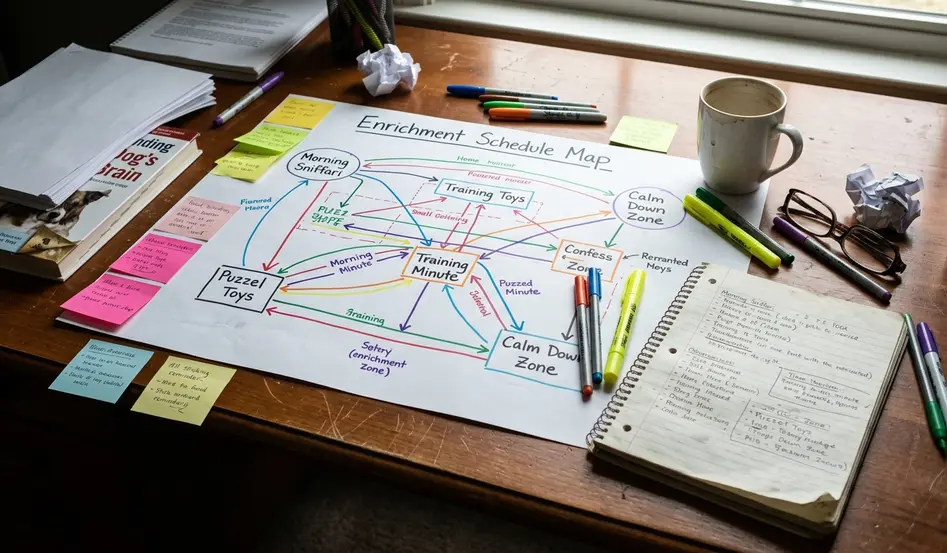
Busy weekday template
Use roughly 15 to 20 minutes total, split across the day. On very tight days, around 12 to 15 minutes divided into three short micro-sessions can still give the dog useful outlets.
- Morning: Breakfast scattered in a towel or snuffle mat.
- Midday: Three rounds of “find it” in one room.
- Evening: Short sniff walk, then a chew or lick mat during wind-down.
This is not glamorous. It is doable, and doable wins.
Weekend or higher-capacity template
When the person has more energy, the dog can have a richer menu without turning the day into chaos.
- Morning: Long-line sniff walk in a quiet area.
- Late morning: Five minutes of shaping, such as stepping onto a mat or targeting a hand.
- Afternoon: Rest block with no agenda.
- Evening: Tug, gentle movement, or food search games followed by decompression.
The rest block is part of the plan. Skipping it can turn a good day into a wired evening.
Reactive-dog template
A reactive dog’s routine may completely replace neighborhood walks with indoor scent games during high-trigger periods like holidays or construction. That is not quitting. That is choosing the right battlefield.
- Morning: Potty at the quietest possible time, then scatter feeding indoors.
- Midday: Window film, white noise, or a covered rest area if outside activity is intense.
- Afternoon: Scent boxes, towel rolls, or a simple treat search in the hallway when it is clear.
- Evening: Decompression chew before the household gets noisy.
Pro Tip: Distance is enrichment for many reactive dogs. A calm look from far away can teach more than a close encounter they cannot handle.
Scaling the same categories up or down
- Sensory: High-capacity day: 30-minute decompression sniffari on a long line. Low-capacity day: scatter feeding kibble in the grass or in a towel.
- Cognitive: High-capacity day: a short shaping session. Low-capacity day: hide three treats behind chair legs.
- Physical: High-capacity day: structured play with breaks. Low-capacity day: slow hallway movement or gentle tug.
- Decompression: High-capacity day: prepared frozen food toy. Low-capacity day: safe chew from the cupboard.
- Social/choice: High-capacity day: quiet parallel walk with a known dog. Low-capacity day: let your dog choose which room to settle in.
Reading Your Dog: Signs of Too Much or Too Little
Enrichment is a conversation. The dog answers through behavior.
Signs your dog may need more
Under-enrichment can show up as destructiveness, restlessness, attention-seeking, barking for interaction, or trouble settling after basic needs have been met. A dog who keeps inventing jobs may be asking for more appropriate work.
Look at timing. If the same chaos appears every evening at 7 p.m., the routine may need a planned outlet at 6:30, not a lecture at 7:05.
Signs your dog may be getting too much
Over-arousal is the sneaky one. Guardians often see a pacing, wild-eyed, mouthy dog and assume the answer is more exercise. Sometimes that dog needs less stimulation and more help coming down.
- Difficulty settling after activities
- Inability to disengage from toys, windows, scents, or people
- Sleep disruption
- More barking or jumping after “fun” outings
- Frantic food searching rather than relaxed foraging
Adult dogs commonly need around 12 to 14 hours of sleep in a 24-hour cycle. That sleep can be broken into naps, but it still needs protection. Rest is not laziness. It is recovery.
For this topic, behavior clues are not clean diagnostic labels. Sudden changes in pacing, destructiveness, appetite, sleep, or tolerance deserve a veterinary workup before the enrichment plan gets blamed or intensified.
The value of doing nothing together
Some of the best enrichment looks like a dog lying near their person while life stays calm. No cue. No puzzle. No performance.
For anxious guardians, this can feel suspiciously unproductive. It is still relationship work. A dog who learns that quiet time with their person is safe has gained something important.
Keeping the Routine Sustainable for You Both
The routine should make life lighter, not turn care into a guilt machine.
Low-effort days count. If your own mental health is thin, the plan can shrink to food in a towel, one potty break with sniffing, and a chew. That is not failure. That is maintenance.
Consistency beats intensity. A dog benefits from predictable chances to sniff, chew, think, move, rest, and choose. They do not need every category delivered like a daily exam.
Use rotation, not escalation
When a dog gets bored, many people buy harder puzzles. Often, rotating simpler options works better. Put three toys away. Bring one back next week. Change the room. Change the texture. Hide the food under a towel instead of inside plastic.
Guardians tend to stick with plans longer when the activities are easy to reset and easy to forgive.
Let your dog’s feedback lead
If your dog settles more easily, recovers faster after triggers, and seems softer in their body, the plan is probably supporting them. If they become pushier, frantic, or unable to rest, simplify.
Build the routine the way you would build trust: in small repetitions, with room for off days. You are not trying to become a perfect dog parent. You are creating a daily rhythm where both of you can breathe a little easier.
Key Takeaway: A sustainable enrichment routine is not the biggest plan. It is the one your dog enjoys and you can repeat without losing yourself.








Leave a Comment