
Play gets talked about as a way to tire a dog out. That is only part of the story, and sometimes not even the useful part.
For a reactive shepherd mix in a narrow apartment hallway, a game of tug can turn into barking, teeth, and a guardian wondering if she has made everything worse. For a worried rescue spaniel, a towel with kibble tucked into the folds can do what a brisk walk cannot: lower the temperature in the room. The dog breathes more slowly. The human unclenches their jaw. Nobody had to be perfect.
This list is sorted by energy and confidence demands, not by novelty. Start where your dog can win today.
Why Play Is the Shortcut to a Stronger Bond
Play is co-regulation. That means it helps both nervous systems, not just the dog’s.
In practical terms, a good game gives the dog a clear job and gives the guardian a break from constant correcting. Breathing often begins to settle within a few minutes of shared quiet play, especially when the game involves sniffing, chewing, or predictable turn-taking. That matters on the days when the walk was too much, the neighbor’s dog barked first, or everyone in the house is already stretched thin.
Games also build the kind of trust anxious and reactive dogs need most. Not trust as a soft idea. Trust as repetition: my person listens, the rules stay steady, and I am not pushed past my limit.
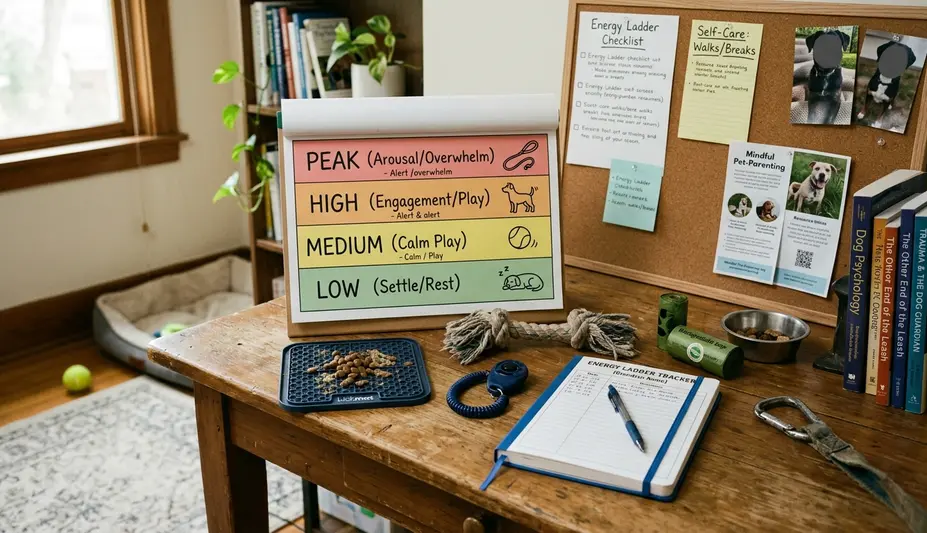
The calmer games come first because they ask for the least from the dog. The skill games add shared learning. The active games bring bigger movement, but with off switches built in.
Key Takeaway: The best bonding game is not the one that looks impressive. It is the one your dog can play without tipping into panic, frustration, or frantic excitement.
How We Chose These 15 Games
The first draft sorted games by age: puppy games, adult dog games, senior dog games. That fell apart quickly.
A senior reactive dog and an anxious puppy may need the same thing: low-pressure confidence builders, short turns, and a guardian who does not feel like a failure by minute two. So the better filter became fit. Each game here has a low equipment barrier, can be adapted to a small home, and can work for under-confident dogs when the guardian keeps the setup easy.
Most indoor versions need no more than a small clearing, roughly 4 by 6 feet. A hallway, kitchen corner, laundry room, or patch of carpet can be enough.
The tags used here
- Energy level: calm, moderate, or high.
- Skill focus: focus, recall, body awareness, sniffing, impulse control, or cooperative play.
- Guardian bandwidth: how much setup and emotional patience the game asks for.
One catch: these bonding activities build confidence and trust, but they do not replace targeted behavior modification protocols prescribed by a credentialed trainer for severe reactivity. Use them as daily relationship work, not as a stand-in for safety planning.
Calm Connection Games (Low Energy, High Trust)
Low-energy games belong at the top because they create a baseline. They tell the dog, nothing wild is about to happen here.
1. The Snuffle Hunt
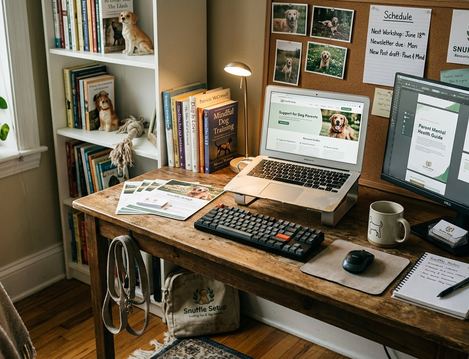
Energy: calm. Focus: sniffing and decompression.
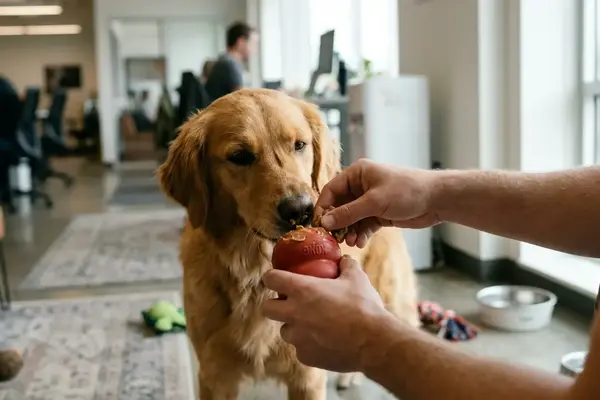
Scatter a handful of kibble, about 15 to 20 pieces, in a rolled towel, fleece mat, or loose blanket. Let the dog search without commentary. If they look back, smile softly and let them return to the hunt.
This is one of the cleanest first games for a tense household because the dog leads with their nose instead of their muscles. For guardians who like the research side, the science of canine scent work and welfare offers useful context for why sniffing can feel so regulating.
2. Eye-Contact Reward Game
Energy: calm. Focus: voluntary focus.
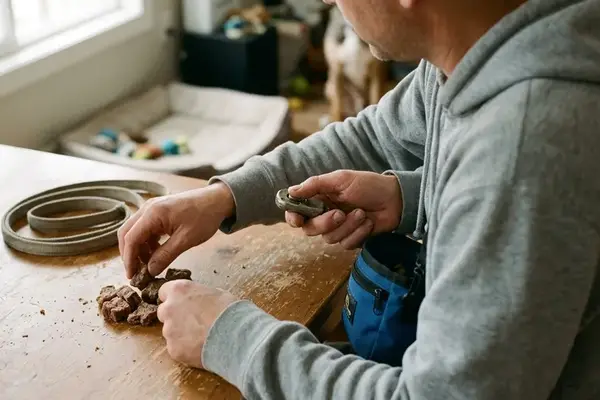
Sit or stand quietly with a few treats. Do not cue watch me. Wait for the dog to glance at your face, mark with a soft yes, and feed near your leg or on the floor.
The important word is voluntary. A dog who chooses to check in is practicing a relationship skill, not performing under pressure.
3. Gentle Massage and Touch Mapping
Energy: calm. Focus: handling tolerance and body awareness.
Keep the first sessions short, around a minute or so. Touch one area at a time: shoulder, chest, side, hip. Watch for leaning in, soft blinking, moving away, lip licking, or sudden stillness.
Touch mapping is not a spa treatment. It is information. The guardian learns where the dog says yes, maybe, and please stop.
4. Mat Picnic
Energy: calm. Focus: settling near the guardian.
Place a mat beside your chair and drop a treat when the dog steps on it, sniffs it, or settles near it. No formal down is required at first. The goal is a shared quiet zone, not military posture.
5. Slow Treat Roll
Energy: calm. Focus: tracking and gentle movement.
Roll one treat a short distance across the floor. When the dog finds it, wait for them to reorient before rolling the next one. This helps dogs who need movement but cannot handle a high-arousal game yet.
Pro Tip: If your dog gets frantic, make the game easier, not longer. Fewer pieces, closer hides, softer voice.
Skill & Focus Games (Moderate Energy, Shared Learning)
Moderate games work best when the guardian treats them like a conversation. Ask, listen, adjust.
6. Find It (Hide the Treat)
Energy: moderate. Focus: confidence and scenting.
Start with the dog watching you place a treat under a towel edge, behind a chair leg, or beside a cardboard box. Say find it once, then let the nose do the work.
Some dogs need visual clues before they trust the game. Others do better when treats are scattered in tall grass because scent, not sight, carries the task. Adjusting between those versions can prevent the game from turning into a test.
7. Trick Stacking: Touch, Spin, Paw
Energy: moderate. Focus: communication and small wins.
Pick three easy tricks your dog already half-understands. Ask for one, reward, pause, then ask for another. Keep the tone playful and the criteria generous.
Start a hand target from a couple of feet away. If the dog bumps your palm, that is enough. In hands-on practice, the dogs who look slow are often the ones thinking hardest.
8. The Two-Toy Game
Energy: moderate. Focus: cooperative play and drop cues.
Use two similar toys. Animate one, let the dog grab it, then make the second toy come alive while the first becomes boring. When the dog switches, reward the drop by starting the next round.
This teaches that releasing one thing does not end the fun. For dogs who guard toys, keep distance, use low-value items, and get professional help if the dog stiffens or threatens.
9. Cardboard Box Choice Puzzle
Energy: moderate. Focus: problem-solving and sniffing.
Use three or four small cardboard boxes from recycling. Place a treat in one, leave the others empty, and let the dog investigate. Open boxes are fine. Flaps folded loosely are fine. Tape and frustration are not invited.
10. Follow the Target Trail
Energy: moderate. Focus: body awareness.
Ask for a hand target, take one step, ask again. Curve around a chair, step over a flat towel, or weave around two cushions. This is tiny agility for dogs who need confidence before speed.
Warning: Do not turn skill games into pop quizzes. If the dog guesses wrong twice, reset with an easier version and pay that effort.
Active & Outdoor Games (Higher Energy, Big Joy)
High-energy play is not the enemy. Unstructured escalation is.
The best active games include a start button, a stop button, and a guardian willing to pause while the dog can still think. That is especially important for high-drive dogs who look happy right until they spill into leash-biting, barking, or body slamming.
11. Structured Tug
Energy: high. Focus: impulse control and cooperative play.
Invite tug with a clear cue. Play for ten to fifteen seconds, then freeze the toy and ask for a drop. When the dog releases, restart the game as the reward.
The common mistake is asking for too much too late. A dog who has tugged for several minutes may not be able to hear the cue anymore.
12. Recall Chase or Round Robin
Energy: high. Focus: recall and joy.
One person calls the dog, rewards generously, then another person calls from across the room or garden. If you are alone, call the dog and jog away so they chase you, not the other way around.
Recall should feel like getting invited to the best part of the party.
13. Flirt Pole Play
Energy: high. Focus: arousal control and release.
Move the lure in short arcs, then cue a pause before the dog is fully wound up. Ask for a drop or brief sit, reward, and start again.
Pushing a highly reactive dog into a fast-paced flirt pole session before they have mastered a drop cue can backfire fast. The frustration often comes out as leash-biting, grabbing, or spinning. Build the off switch first.
14. Long-Line Decompression Walk
Energy: high or moderate, depending on the dog. Focus: sniffing, choice, and recall.
Use a long line, roughly 15 to 20 feet, in a safe open area. Let the dog sniff, arc, pause, and choose direction where possible. Call them back for easy rewards, then release them to sniff again.
15. Backyard Obstacle Loop
Energy: high. Focus: body awareness and confidence.
Set up a low loop: around a bucket, over a broom on the ground, onto a mat, back to you. Keep jumps low or skip them. The point is shared movement, not athletic proof.
Signs to Pause Play (Over-Arousal Checklist)
- Hard staring or inability to break focus from the toy.
- Frantic snatching at treats instead of taking them gently.
- Panting with a spatulate tongue, wide at the bottom.
- Guardian feeling their own heart rate spike.
If two of those show up, pause. Scatter a few treats, breathe, and switch to a calmer game.
Making Play a Daily Ritual
Short and frequent beats long and occasional.
Aim for a few minutes per session, twice a day. That is enough to matter and small enough to survive a hard Tuesday. The guardian who is exhausted after work does not need a full enrichment curriculum. They need one doable ritual that says, we are still on the same team.
How to make it stick
- Choose one calm game for difficult days.
- Choose one skill game for ordinary days.
- Choose one active game for days when your dog has room to move and enough brain left to listen.
- Stop while the dog is still successful.
- Write down which games your dog asks for again.
That last note matters. The games your dog gravitates toward are data about their personality. A dog who keeps choosing Snuffle Hunt may be asking for decompression. A dog who lights up during Two-Toy may be craving cooperation. A dog who loves the mat may be telling you they feel safest when the world gets smaller.
Key Takeaway: End on a win to protect both your moods. Bond-building play should leave the dog a little softer and the guardian a little less alone.
There will be messy sessions. A toy will be too exciting. A treat will roll under the stove. The dog will bark at the window halfway through a beautiful recall game.
That does not cancel the work. It is the work. Show up, make it easier, and play again tomorrow.



Leave a Comment