
My Argument: Connection Comes Before Compliance
Obedience drills optimize for control. Relationship-based training optimizes for trust and communication.
That difference sounds tidy on paper, but it shows up messily in real homes: a dog freezing at the front door, a guardian gripping the leash too tightly, a “sit” delivered with perfect posture and a pounding heart. Training logs show this argument took shape over roughly three or four years of fostering highly anxious dogs, where the useful question slowly changed from “Did the dog follow the command?” to “How quickly did the dog recover after the stressor passed?”
That shift matters. A dog can obey and still be terrified. A dog can hold position and still be learning that the human beside them is not listening.
Drills are not useless. A clean recall, a practiced mat cue, and a predictable hand target can all help a dog navigate daily life. The mistake is making drills the starting point, especially for dogs whose nervous systems already live near the ceiling.
The metric that changed the conversation
Compliance asks, “Did the body do the thing?” Relationship-based training asks, “Was the dog emotionally available to learn?” Those are not the same question.
In anxious and reactive dogs, the second question usually gives the better training plan. It leads to more distance, slower setups, shorter sessions, softer hands, and fewer battles over posture. It also gives guardians a way out of the shame spiral. The dog is not “being bad.” The dog is giving information.
Key Takeaway: Obedience can be part of a good training plan, but connection tells you whether the dog is ready for that plan in the first place.
What Pure Obedience Drilling Actually Misses
Pure drilling trains behaviors in isolation. Sit. Down. Heel. Stay. Repeat.
That can look clean in a quiet kitchen. It can fall apart at the curb when a skateboard rattles past, a loose dog appears, or the hallway smells like the neighbor’s shepherd. The cue did not vanish. The dog’s emotional state changed.
A “sit” under threshold means very little when a reactive dog is over threshold. Picture a dog executing a perfect sit while panting heavily and whale-eyeing the handler. The body complied. The nervous system did not calm down. If the handler celebrates only the sit, they may miss the trembling legs, tight mouth, tucked weight shift, and frantic scanning.
The shutdown problem
Repetition without context can create a compliant-but-shut-down dog. These dogs often look “well trained” to passersby because they move slowly, avoid conflict, and stop offering behavior. In a home, though, their guardians may notice a different story: less play, less curiosity, more startle, more sleeping in corners.
Stress also stacks. Cortisol from trigger-stacking events can take roughly two to three days to fully dissipate from a dog’s system, which is why a rough Tuesday walk can still affect Thursday’s training session. If every walk becomes a drill, the dog may never get enough recovery time to return to baseline.
- Drilling may improve posture without improving confidence.
- Drilling may suppress barking without changing fear.
- Drilling may make the human feel organized while the dog feels trapped.
Warning: If a dog can perform a cue only when held in place, physically blocked, or repeatedly corrected, the cue is probably not the main issue.
What Relationship-Based Training Really Means
Relationship-based training is not “letting the dog do whatever they want.” It is not a vibe, a slogan, or a soft excuse for chaos.
It means the human learns to read body language, meet emotional needs, and build a communication loop that works in both directions. The dog’s signals matter before they escalate. A head turn counts. A paw lift counts. A sudden refusal to take food counts.
Safety comes before skill
Dogs learn better when they feel safe enough to experiment. That is why consent-based handling, choice, and predictable routines are not decorative extras. They are the ground under the training.
One foster case made this painfully clear. The handler initially used continuous high-value food luring to move anxious dogs past triggers. The dogs followed the food, but their bodies told a different story: stiff necks, pinned ears, rushed swallowing, eyes locked on the trigger. The food created conflict. The better plan was to establish distance first, often keeping a buffer of about 15 to 20 feet from known triggers so the dog could voluntarily disengage.
Marker-based training and reinforcement still matter here. A clicker, verbal marker, or treat delivery pattern can be useful. But those tools sit inside the relationship. They do not replace it.
What it looks like in practice
- Notice the dog’s body before giving the cue.
- Ask whether the environment is too hard.
- Give the dog an exit when possible.
- Reinforce recovery, check-ins, and voluntary disengagement.
- End before the dog has to scream for space.
Pro Tip: If your dog checks in with you after noticing a trigger, pay that moment. That glance is communication, not a small detail.
The Reactive Dog Case: Where the Difference Shows Most
Reactivity is an emotional response, not a disobedience problem. That one sentence can change an entire walking routine.
A reactive dog barking at another dog across the street is not usually thinking, “I refuse your leadership.” More often, the dog is overwhelmed, frightened, frustrated, or too aroused to process normal cues. Drilling commands at that point can increase stress. The dog hears noise from the handler while the trigger still feels unsafe.
The alternative: decompression first
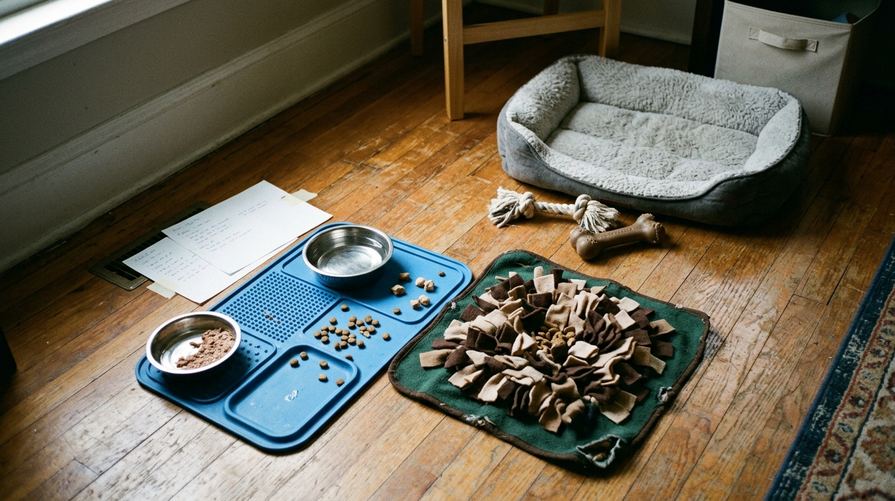
For many reactive dogs, the most productive “training walk” does not look like training at all. It looks like a 10- to 15-minute sniffari on a 15-foot long line, with the route chosen for space rather than obedience performance.
The aim is not to polish a heel. The aim is to lower the dog’s baseline stress so the next hard moment has somewhere to land. Sniffing, meandering, pausing, and choosing direction can help a dog come back into their body. In dense urban areas, decompression walk distances and long-line lengths need adjustment; a 15-foot line may suit a quiet field but be too much on a narrow sidewalk. On rural trails, the same line can give a dog room to gather information without pulling the guardian into every scent patch.
Distance is not avoidance in the lazy sense. It is a training tool. A dog who can watch another dog from far enough away, breathe, sniff, and disengage is practicing the exact skill many guardians wanted from “leave it” in the first place.
- Choose wider routes over busier routes.
- Turn away before your dog erupts, not after.
- Reward the moment your dog notices and softens.
- Skip formal leash drills on high-stress days.
Addressing the Counterarguments Fairly
The obedience-first camp is not always wrong. Some arguments deserve a fair hearing, especially because guardians are often trying to keep everyone safe.
“Obedience is faster”
Sometimes it is. A drilled “sit” can stop motion quickly. A well-practiced recall can interrupt a risky choice. Short-term compliance has value, especially around roads, doors, and children.
But fast is not the same as durable. If a dog sits while still rehearsing panic, the next trigger may hit harder. Relationship-first training often looks slower because it spends time on the part people cannot photograph: recovery, trust, and emotional predictability.
“Dogs need structure”
Yes. Dogs need structure.
But structure does not have to mean rigid micromanagement. For many dogs, structure means the walk starts calmly, the leash pressure is consistent, the human does not yank them toward scary things, and meals, rest, play, and bathroom breaks happen in a rhythm they can understand. Predictability is structure. Clear communication is structure. A guardian who notices stress early is providing structure.
“Some working dogs thrive on drills”
Also yes. Context matters.
Some sport, service, detection, herding, and protection dogs are selected, conditioned, and handled in environments where repetition has a specific job. A dog bred and prepared for task fluency may enjoy precise repetition when the handler reads arousal well and builds recovery into the work.
That exception should not become a blanket rule for a fearful pet dog in an apartment hallway. Different dog. Different history. Different stakes.
Key Takeaway: Structure helps dogs when it creates safety and clarity. It harms dogs when it demands performance from a nervous system already in survival mode.
Scope, Limitations, and When to Get Professional Help
This is an opinion grounded in lived experience with anxious and reactive dogs. It is not a substitute for a certified behaviorist, veterinary behaviorist, or qualified trainer who can see the dog in front of them.
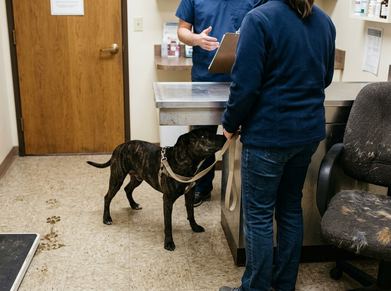
That boundary matters. Relationship-building frameworks cannot resolve behavioral changes rooted in acute physical pain or undiagnosed neurological conditions. This lens gets blurrier when the behavior changes fast, looks out of character, or arrives alongside appetite shifts, sleep disruption, sensitivity to touch, or sudden fear of familiar places.
When the situation needs more than a better walk plan
Serious aggression, a bite history, escalating guarding, or sudden behavior change warrants professional help. A sudden, uncharacteristic behavioral shift within a day or two should also put a veterinary call on the list, not just a training adjustment.
Good help should not shame the guardian or flood the dog. Look for someone who asks about medical history, daily routine, sleep, trigger patterns, recovery time, and management. Approaches should be adapted per dog, breed history, household safety needs, and individual trauma.
Citations
For a veterinary organization’s guidance on humane training practices, see the American Veterinary Society of Animal Behavior position statement on humane training.
Warning: If your dog’s behavior changes suddenly, do not assume it is a training problem. Pain can look like disobedience.
How to Start Shifting Toward Relationship-First Training
The first move is not a new cue. It is observation.
Before correcting, watch. Is the dog holding their breath? Are they scanning? Did their tail carriage change? Did they stop sniffing? Guardians often catch the early signs once they stop waiting for the big explosion.
Start with three body-language signals
Pick three signals and track them for a week. Not twenty. Three.
- Head turn: The dog looks away from something uncomfortable.
- Whale eye: The whites of the eyes show as the dog keeps watch.
- Sudden stillness: The dog freezes before reacting or retreating.
These signals are not moral judgments. They are weather reports. Once a guardian can read the weather, they can stop arguing with the storm.
Lower the trigger load
Reduce trigger exposure on purpose. Walk at quieter times. Cross the street early. Use visual barriers. Give the dog recovery days after hard outings. This is not “letting them win.” It is keeping the dog within a learning zone.
Before picking up the leash, practice a few minutes of box breathing or grounding. A dog who lives with a worried human often notices the worry before the leash even clips on. Co-regulation starts with the person’s nervous system, not the treat pouch.
Build one daily connection ritual
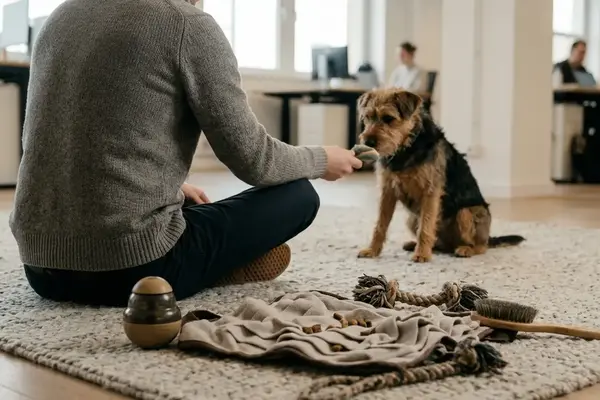
Choose one small ritual and make it boringly reliable: a sniff walk, a tug game with clear start-and-stop cues, a quiet mat session, or calm sitting together after dinner. Keep it simple enough to repeat on tired days.
Then change the question at the end of the day. Not “Did my dog obey?” Ask, “Did my dog feel safe enough to choose to cooperate?”
That question will not fix every behavior. It will, however, point the training in a kinder and more useful direction. For a lot of dog moms trying to do right by a complicated dog, that is the first breath of relief.









Leave a Comment