
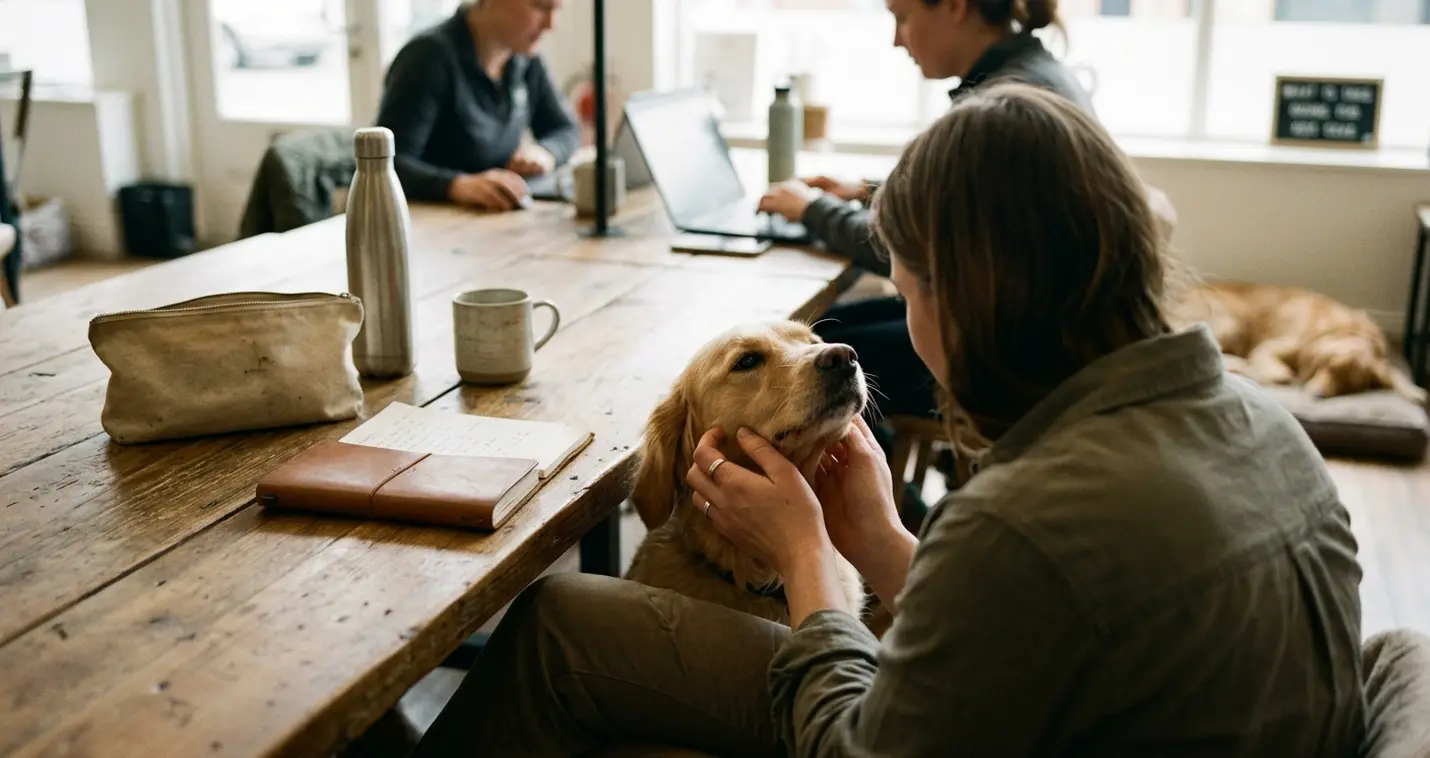
When a dog is struggling, the person holding the leash often becomes the quiet second patient. Not because the guardian caused the problem, and not because love is supposed to fix behavior. Anxiety matters because dogs read us closely, and because a tense human body has fewer choices.
This article is not about becoming a perfectly calm dog parent. It is about making your own nervous system a little more available, so you can make safer, kinder decisions for both of you.
Quick Nav: Why your anxiety matters, naming the feeling, co-regulation, stress-lowering routines, tracking small progress, and knowing when to bring in support.
Why Your Anxiety Matters When Your Dog Struggles
Dogs notice what many humans miss: a tightened grip, a held breath, the tiny pause before crossing paths with another dog. They can detect changes in human sweat and heart rate within roughly half a minute of a stressor occurring. That does not mean your stress creates your dog’s fear. It means your body becomes part of the environment your dog is trying to interpret.
Field experience revealed a pattern that many reactive-dog guardians recognize. Mechanical leash corrections often escalated tension, while a handler who softened their posture, slowed their breathing, and gave the dog more room frequently changed the feel of the moment. The leash stopped becoming a warning cable.
That is the first principle here: behavior does not happen in a vacuum. Your dog is tracking the sidewalk, the squirrel, the neighbor, the barking behind the fence, and you. A guardian who feels watched, embarrassed, or scared may shorten the leash, lean forward, and scan for danger. To a sensitive dog, that can read like confirmation that danger is near.
Key Takeaway: Your anxiety is not a character flaw. It is information. When you learn to read it sooner, you can respond before both nervous systems hit the red zone.
The shame-free frame
Guardians of anxious or reactive dogs often live with a low-grade hum of anticipation. The walk starts before the door opens. The body rehearses the next bark, lunge, or stare from a stranger.
Self-care can sound fluffy in this context, but it is practical. A steadier guardian can choose a quieter route, turn around earlier, skip the crowded path, or end the session before the dog tips over threshold. Those choices are care.
Step 1: Name What You’re Actually Feeling
Most dog-parent anxiety gets called stress, but stress is too broad to guide a plan. A guardian who feels guilt needs something different from a guardian who fears judgment. A guardian grieving the easy dog they expected needs tenderness, not another training spreadsheet.
Group feedback indicates that many guardians carry several feelings at once. One part feels protective. Another feels embarrassed. Another feels helpless because the dog they love is having a hard time in a world full of triggers.
Four feelings worth separating
- Guilt: the belief that your dog’s struggle means you did something wrong.
- Fear of judgment: the sense that every passerby is grading your dog and your competence.
- Helplessness: the feeling that nothing you do changes the pattern.
- Grief: sadness over the dog life you imagined, such as patio brunches, easy hikes, or calm greetings.
Naming the exact feeling shrinks it down to a size you can work with. It also protects your dog from becoming the container for every hard emotion in the room.
A 90-second voice-note practice
A daily mood tracker can become one more chore for an already tired guardian. A voice memo is easier.
- After a stressful walk, vet visit, hallway encounter, or neighbor interaction, sit somewhere safe.
- Record a 60- to 90-second voice memo before you analyze anything.
- Start with: The moment my body changed was...
- Name the feeling, not the dog’s behavior. Try: I felt judged when... or I felt scared because...
- End with one need: space, reassurance, a shorter route, a training plan, or rest.
This is not about making a permanent emotional archive. It is a small way to catch the real trigger moment. For some people, it is not the barking. It is the neighbor’s sigh afterward.
Step 2: Co-Regulation — Calming Yourself to Calm Your Dog
Co-regulation means your body can lend a little steadiness to your dog’s body. It does not mean deep breathing will magically calm a dog who is already over threshold and actively reacting to a trigger. At that point, distance and safety matter first.
Before the reaction, though, your posture can change the conversation. A loose shoulder, a slower exhale, and a leash with slack tell the dog that you are not bracing for impact.
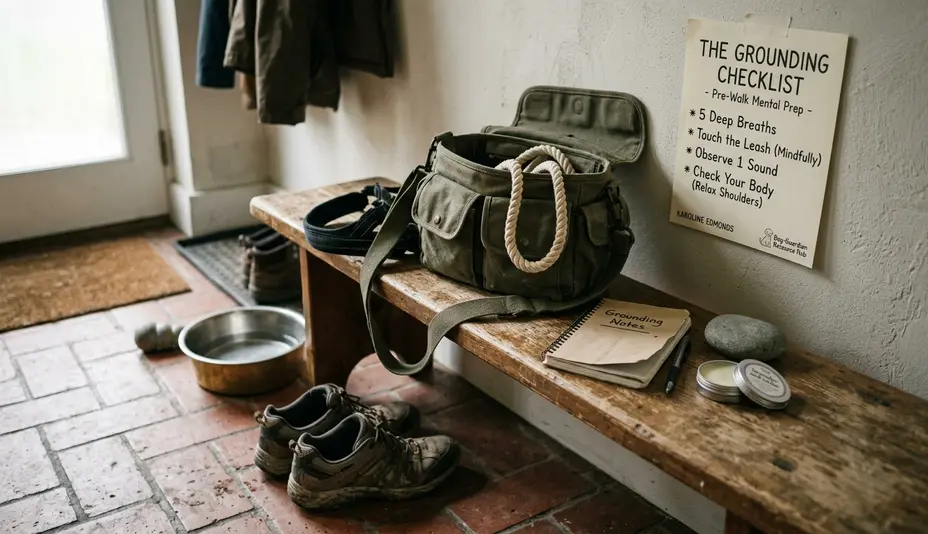
Pre-Walk Co-Regulation Checklist
- Pause at the door before touching the doorknob.
- Complete three cycles of 4-second inhales and 6-second exhales.
- Drop shoulders away from the ears.
- Check leash grip to ensure a visible J-loop of slack.
- Step outside only when you can feel your feet under you.
Why the front door matters
The front door is often the peak moment of anticipatory anxiety. The dog predicts the hallway, the street, the barking dog across the road. The guardian predicts the dog’s reaction.
A short pause at the door interrupts that launch sequence. It gives both ends of the leash a chance to leave the house with a little less pressure.
Common mistakes and quick fixes
- Mistake: gripping the leash like a handlebar. Try: slide your grip down a couple of inches until you can see a soft J-loop.
- Mistake: expecting breathing to work during a full reaction. Try: create distance first, then breathe once the dog can gather information again.
- Mistake: using the same leash setup everywhere. Try: use a standard 6-foot leash in dense urban settings and a 15-foot long line in open parks where it is safe and allowed.
Pro Tip: If your shoulders rise every time you see another dog, make shoulder-dropping your cue to turn your own body sideways and give your dog more space.
Step 3: Build Routines That Lower Stress for Both of You
Predictability reduces the amount of guessing your nervous system has to do. That matters because uncertainty is a major anxiety driver for guardians. If every walk feels like a pop quiz, your body starts studying for disaster.
Routines for struggling dogs do not need to be rigid. They need to reduce repeated overwhelm.
Start with timing, not willpower
Some neighborhoods are simply harder at certain hours. School pickup, after-work dog traffic, trash pickup, lawn crews, and weekend brunch crowds can turn a normal walk into a trigger stack.
Shifting walks to off-peak hours, such as early morning or late evening, is not avoidance in the shameful sense. It is environmental management. It gives the dog a chance to practice existing in the world without being flooded.
Build low-stakes wins
A low-stakes win is something both of you can complete without needing heroic self-control. It might be standing in the driveway for two calm minutes. It might be crossing the street before a trigger gets too close. It might be letting your dog sniff a hedge instead of marching toward the busy corner.
- Schedule 15 to 20 minutes of dedicated sniff-time on a 10-to-15-foot long line in an appropriate open space.
- Choose one quieter route and repeat it for a week before changing too many variables.
- End a walk while it is still manageable, not only after things unravel.
- Keep one boring success ritual, such as a treat scatter after returning home.
Sniffing is not a consolation prize. For many dogs, it is decompression. For many guardians, watching a dog sniff quietly can also remind the body that not every outing has to be a test.
What to avoid
Avoid building the whole plan around forced exposure. Repeatedly walking straight into known trigger zones may look brave from the outside, but it can leave both dog and guardian more sensitized by the end of the week.
The goal is not to make life tiny. The goal is to make the week less punishing so learning has room to happen.
Step 4: Reframe Setbacks and Track Small Progress
Progress with reactive or anxious dogs is rarely linear. A bad day is data, not defeat.
That sentence can sound tidy until your dog barks at the one person you were hoping would not notice. Then the brain does what anxious brains do: it collects evidence that you are failing. A win-log pushes back, not by pretending everything is fine, but by recording the recoveries your nervous system tends to erase.
The weekly win-log
Log two or three specific micro-wins per week. Keep them concrete enough that another person could picture them.
- The dog shook off after a trigger passed.
- You crossed the street before your dog stiffened.
- Your dog looked at a barking dog and then took food.
- You ended the walk early without calling it a failure.
- You noticed your own jaw clench and softened your grip.
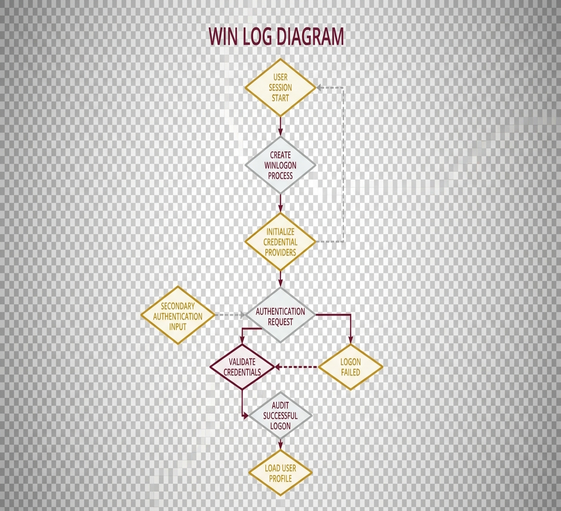
The win-log practice targets negativity bias by forcing attention toward micro-recoveries, not only the absence of reactions. Absence is hard to measure. Recovery is often visible.
Separate your worth from the moment
Your dog’s behavior in a single moment is not a public referendum on your love, skill, or commitment. It is one nervous system meeting another nervous system in a specific environment.
One catch: reframing a setback will not make an unsafe environment safe. If a dog is actively lunging into a busy intersection, physical management and safety protocols must come before mindset work.
Warning: Do not use a positive reframe to talk yourself out of taking safety seriously. Kindness includes distance, equipment checks, and leaving when needed.
Knowing Your Limits: When to Bring in Support
Self-regulation helps, but it is not a substitute for veterinary, behavioral, or mental-health care. For leash-side anxiety, context still matters more than any single script.
It may be time to consult a certified dog behavior consultant, qualified trainer, veterinarian, or veterinary behaviorist if reactivity escalates over three to four consecutive weeks despite consistent routine adjustments. The same is true if there are safety concerns, redirected bites, inability to recover after triggers, panic around ordinary handling, or sudden behavior changes that could have a medical component.
For a broad overview of dog anxiety and behavior, the ASPCA guidance on dog anxiety and behavior can be a useful starting point.
Signs your own system needs care, too
Support is also appropriate when your anxiety starts shrinking your life. If you dread leaving the house, replay every walk for hours, avoid sleep, feel constantly on alert, or experience panic symptoms, speaking with a doctor or therapist is part of caring for your dog.
That is not overreacting. It is stewardship.
- Ask a trusted person to take one low-risk care task off your plate.
- Bring written notes to the vet or behavior professional so you do not have to remember everything while stressed.
- Share patterns, not just the worst incident.
- Tell your therapist or doctor that your dog’s behavior is affecting your daily functioning.
Building a life with a struggling dog asks for patience, but it should not ask you to disappear. Your steadiness matters. Your rest matters. And on the hard days, the next right step may be smaller than you think: loosen the leash, breathe out longer than you breathe in, and choose the route that lets both of you come home with a little dignity intact.












Leave a Comment