
How Can a New Dog’s First Time Home Alone Feel Manageable?
The fridge is nearly empty, there is a prescription to collect, and the new dog follows every movement toward the front door. How does a guardian leave for a short errand when the dog has never been alone in this house, and the guardian feels anxious too?
A manageable departure starts before anyone reaches for the keys. The plan has four stages: prepare a comfortable space, rehearse tiny departures, watch the dog’s body language, then attempt one short errand within an already comfortable absence.
Some dogs begin settling within days; others need weeks. New dog parenthood comes with enough uncertainty without adding a departure deadline. The dog’s response determines the next step.
Build a Resting Spot Before Practicing an Exit
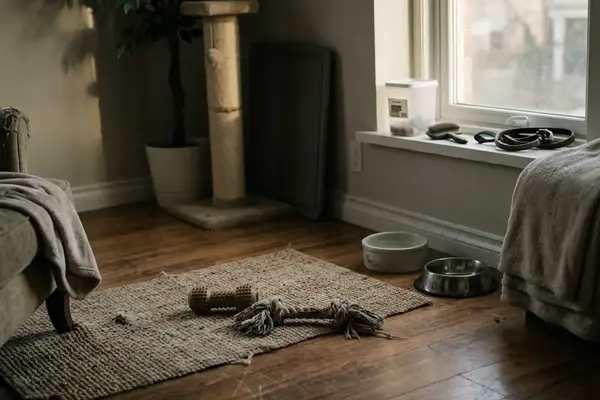
Choose somewhere away from the front door and street-facing windows. A gated kitchen corner or quiet bedroom may suit a dog that struggles with confinement. An open crate can work for a dog that already chooses to rest there. Closing a crate door introduces another challenge, so it should never be the automatic starting point for an unfamiliar dog.
Look for a place where the dog’s muscles soften and its head comes down. Then prepare it:
- Keep fresh water within easy reach.
- Add a familiar bed or blanket.
- Include a worn T-shirt carrying the guardian’s scent, provided the dog leaves fabric intact.
- Offer a familiar chew or lick mat that the dog has already used safely.
- Remove cords, shoes, accessible trash, and tempting objects the dog has investigated with its teeth.
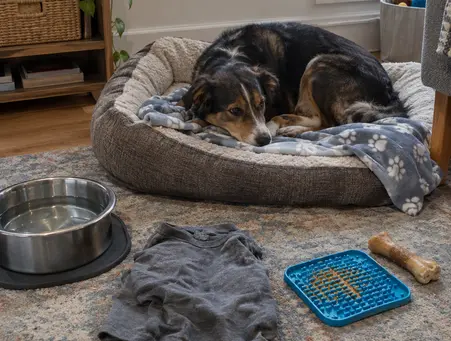
Test the arrangement while the guardian remains home, first nearby and then in an adjacent room. A dog that repeatedly watches the barrier or cannot lie down needs an easier setup before front-door practice begins. Keep food items out of unsupervised sessions if the dog might swallow pieces or destroy them.
Separate the Keys, Shoes, and Door Before Combining Them
Departure cues can make a dog uneasy before the guardian leaves. Keys jingle, shoes get tied, a bag lands on a shoulder: together, those details can become a prediction of being alone.
Rehearse each detail separately during ordinary household activity. Pick up the keys, put them down, and sit on the couch. Lace shoes, then make tea. Practice the deadbolt click separately, with the dog safely away from the doorway, and stay inside afterward.
Wait for comfortable body language before combining those cues. A dog that keeps its chin resting on the bed offers a clearer starting point than one that springs up at every sound.
A Departure Ladder With Small Rungs
- Step behind an interior door and return before the dog becomes uneasy.
- Step outside the front door and come straight back.
- Stay just beyond the door for a slightly longer, still-comfortable interval.
- Build toward a mailbox trip or another nearby task only after shorter absences look easy.
Allow ordinary indoor activity between rehearsals. Repeating exits in a rapid loop can leave the dog watching for the next one. If tension appears, return to the last easy rung rather than stretching the current attempt.
Use Video to See What Happens After the Door Closes
A quiet hallway tells only part of the story. A dog may stand rigidly at the door without barking, leaving a guardian with the impression that everything went smoothly.
Record rehearsals with a securely positioned phone or pet camera. Include both the resting area and the exit in the frame, and keep equipment and cables out of reach. Review the whole sequence, including what happens after the food is finished.
- Signs of coping: loose posture, casual sniffing, lying down, using a familiar chew, and eventually dozing.
- Possible early stress: repeated pacing, panting without heat or exertion, lip-licking, yawning, whining, or fixed attention on the door.
Read signals together and compare them with the dog’s usual behavior. A single yawn cannot explain an entire session.
Watch the Untouched Chew
If a dog abandons a normally appealing food puzzle as soon as the guardian leaves, stop increasing the absence. Check the footage and return to an easier step. Food refusal deserves attention, though appetite alone cannot identify the cause.
Set Clear Stop Points Before Stress Escalates
Deciding when to stop beforehand takes some emotional weight out of the moment. If pacing, whining, or other stress appears shortly after departure, return calmly and shorten the next rehearsal. There is no need to wait for silence while distress builds.
After a frightening storm, a difficult veterinary visit, or disruptive visitors, pause rehearsals for a few days if the dog remains unsettled. Resume with something comfortably familiar.
Escape Attempts Need Help
Self-injury, frantic escape attempts, or panic around barriers call for prompt veterinary support. Arrange company rather than continuing solo rehearsals that trigger panic.
A veterinarian can check for medical contributors and discuss treatment. A qualified behavior professional can help build an appropriate plan, including reactive dog support when outside triggers complicate departures. Persistent distress despite easier steps, or difficulty tolerating even brief absences, also warrants help. This ladder suits adjustment nerves; severe separation panic needs an individualized treatment and management plan.
Make the First Errand Easy to Abandon
Choose an errand whose entire door-to-door duration fits inside an absence the dog has already handled comfortably. A prepaid nearby coffee pickup may work. An appointment, unpredictable checkout line, or traffic-heavy route creates unnecessary pressure.
If no useful errand fits yet, keep practicing. Arrange another person’s company for essential trips.
- Choose a natural resting period after suitable exercise, a potty break, and the dog’s usual meal routine.
- Prepare the resting spot and check the camera before starting the departure sequence.
- Offer the familiar safe chew, use the same quiet cue phrase, and leave without a prolonged farewell.
- Keep the trip within the rehearsed duration and return early if monitoring shows distress.
A passenger can check the camera during travel. A driver should pull over safely before looking. On returning home, greet the dog calmly and let it approach.
Give the Worry Somewhere to Go Before Tonight’s Practice
Guilt can arrive before the car leaves the driveway. Many new dog moms feel responsible for every uncomfortable moment. Teaching manageable independence supports the dog’s long-term wellbeing while making room for the guardian’s daily needs.
While safely parked, take a gentle breath and let the exhale last a little longer than the inhale. Repeat without forcing it. A steadier guardian can carry out a familiar departure more easily, although human calm cannot prevent every canine stress response.
For pet parent wellbeing, a brief journaling note can replace replaying the whole outing: what happened, when the dog relaxed, and which step felt comfortable. A harder day supplies information for the next rehearsal.
Tonight, choose the last departure step the dog handled with loose body language, record a brief rehearsal, and return before that comfortable interval ends.



Leave a Comment