
The Trainer in Your Earbuds Is Doing Real Emotional Work
A dog podcast playing in a quiet car at 6:00 AM can provide legitimate social support. For a guardian whose daily life has narrowed around a reactive dog, that familiar voice may be the first one to describe the morning without judgment.
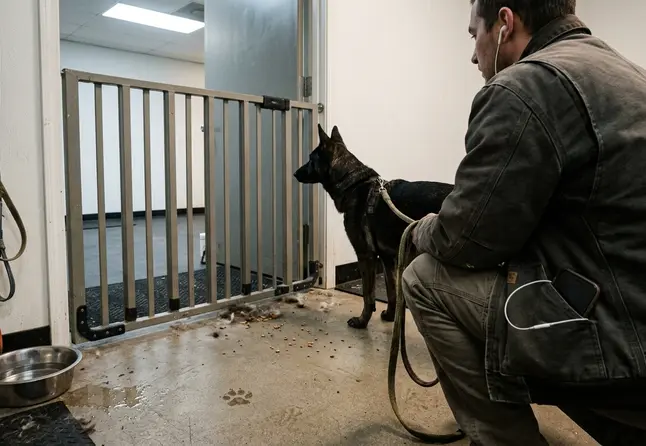
The scene is specific: a pre-dawn walk between 6:00 and 6:45, audio set around 40% so traffic, footsteps, and approaching dogs remain audible. Or it is the dusk route chosen because the neighborhood is calmer then. The phone stays tucked in a pocket while a host calmly describes the same lunging, barking, or frantic scanning the listener saw a few hours earlier.
Audio listening often gets dismissed as passive consumption or avoidance of “real” community. That framing misses what happens when someone finally hears their exact problem named aloud. Shame loosens. The guardian gains language for the behavior. A lonely experience becomes recognizable.
This matters because self-blame thrives in silence. A recurring host can interrupt the private story that says, “Everyone else can handle their dog, so I must be doing something wrong.” The episode may offer training ideas, but its first useful act is often simpler: it gives the guardian company.
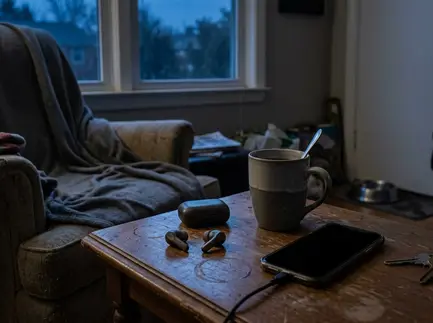
Audio Can Count
A calming podcast habit can break the self-blame loop even before it changes anything at the end of the leash.
Why a Stranger’s Voice Can Settle a Guardian’s Nervous System
Media researchers Donald Horton and R. Richard Wohl described mediated interaction in 1956. Their work helps explain parasocial connection: a one-sided yet genuinely felt relationship with a recurring presenter or performer.
The host does not know the individual listener. The listener, however, learns the host’s rhythms, favorite phrases, sense of humor, and usual response to a setback. Familiarity builds across episodes. When the host says “you,” the word can feel unusually direct during a solitary walk.
Why voices feel close
Audio has qualities that text and video rarely combine. Conversational pacing leaves room to breathe. Unscripted pauses make the speaker sound present rather than polished. A voice delivered at ear-distance creates intimacy without requiring eye contact, a reply, or the energy to explain what happened at the park.
That low social demand can help a depleted guardian settle. Someone can listen while driving home after a hard veterinary appointment or walking a quiet trail after an embarrassing sidewalk encounter. The connection asks for very little in the moment.
A Tuesday episode becomes an appointment
Schedule matters too. A show released every Tuesday morning establishes an expected point of contact. Predictability carries particular weight for a guardian who has stopped joining group walks, declined puppy playdates, or lost casual conversations with other dog people.
A podcast cannot diagnose a dog or assess risk. Its emotional effect still deserves to be taken seriously. Broader guidance on loneliness and social connection in adults also recognizes the value of regular, meaningful contact. For some pet parents, a weekly voice becomes one small piece of that rhythm.
How Reactivity Quietly Shrinks a Guardian’s Social World
Isolation around reactivity usually arrives through logistics. The guardian leaves the dog park when another car pulls in. Walks move to 5:30 AM or after 9:00 PM. Guests require gates, closed doors, leashes, and careful instructions. A family visit becomes a negotiation over where the dog will stay and who might enter the room.
Each choice may be sensible on its own. Together, they can erase the casual contact that once made a week feel populated.
The human withdrawal comes next
A neighbor says, “She just needs to socialize more.” A relative asks why training has not fixed the barking yet. After enough comments, the guardian stops explaining. Declining the next invitation feels easier than preparing another account of thresholds, trigger stacking, or why an off-leash greeting would make the problem worse.
Public walks carry a second burden. The guardian manages the dog’s arousal while bracing for other people’s reactions. Anticipatory heart-rate elevation may begin in the range of 10 to 15 seconds before a familiar trigger appears, during the stretch when the guardian has already spotted the approaching dog and is calculating an exit.
That bodily response deserves compassion. It reflects preparation under pressure, not a lack of confidence.
Name Both Triggers
The dog may react to another dog. The guardian may react to the possibility of staring, criticism, or losing control in public. Training plans work better when both nervous systems receive care.
Four Places the Podcast Habit Stops Helping
Parasocial support has edges. Trouble starts when the comfort of listening is asked to do work that requires observation, feedback, or direct assessment.
1. The host cannot see the dog
A presenter cannot measure the dog’s threshold distance, watch the leash tighten, or notice a subtle change in gait. An episode about fear-based reactivity may sound perfectly relevant while the dog is responding to pain. Sudden behavioral changes, possible pain, and bite histories require direct intervention rather than audio commentary.
This is the topic’s hard boundary: a podcast has emotional reach and no diagnostic capacity. A certified behavior consultant can observe what happens in context and adjust the plan from what is actually visible.
2. Multiple shows create advice collision
Subscribe to four dog podcasts and four incompatible protocols may land in the same queue. One host recommends creating distance. Another discusses controlled exposure. A third emphasizes obedience cues. The listener keeps gathering ideas, and the volume of information begins to feel like movement.
Meanwhile, the dog encounters a different approach every few days. Consistency disappears before any one adjustment has been observed long enough to produce useful notes.
3. A 45-minute story distorts the calendar
Hosts need an episode to have shape, so they often describe a breakthrough within a 45-minute arc. The underlying counter-conditioning may have taken approximately 16 to 24 weeks. Compression makes the story listenable while quietly resetting expectations for an ordinary Tuesday evening.
A guardian may then interpret one difficult walk as evidence that the method failed. In real life, progress often looks less dramatic: a dog recovers sooner, eats at a slightly closer distance, or turns away with less leash tension.
4. Comfort delays the needed appointment
The most serious blind spot appears when feeling understood replaces seeking direct help. Another episode soothes the guardian enough to postpone booking support, even as the dog’s behavior changes suddenly or safety becomes harder to manage.
A useful test is concrete: after listening, does the guardian know what to observe or do next? If the answer remains unclear for several episodes, the queue has become a waiting room. The next action belongs on the calendar, not in the headphones.
Turning Listening Hours Into One Repeatable Change
The one-cue rule keeps audio connected to practice: take a single behavior, threshold adjustment, or reframe from each episode. Write it down before opening another show.
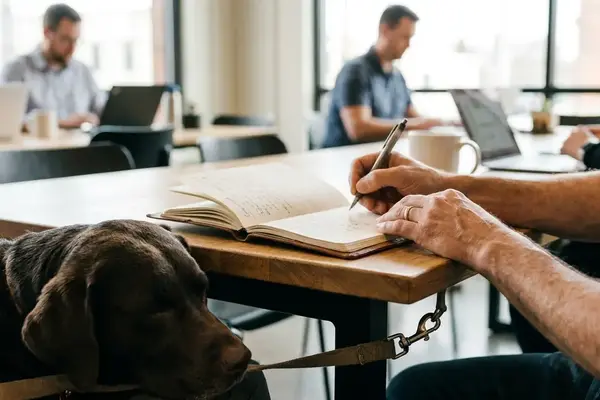
Use the notebook already in the bag
Divide one page into two columns. Label the left column What the host said. Label the right column What my dog actually did when I tried it.
- Write the chosen idea in one sentence.
- Test it during a planned, low-pressure session.
- Record what the dog did, including whether the dog could eat.
- When recovery time matters, note it in exact seconds.
- Repeat before deciding whether to keep or change the idea.
The second column protects against vague impressions. “He seemed better” offers little direction. “He took food before the trigger, then needed this many seconds to resume sniffing” gives the guardian something observable to compare next time.
Give the podcast a defined place
Choose one listening slot: the drive home, a decompression walk on a quiet trail, or a 20-minute yard sniffing session. Keeping audio within a boundary prevents it from filling every silent moment.
The dog still gets direct attention. The guardian also gets periods without instruction, allowing both of them to notice the environment and settle into ordinary companionship.
One Episode, One Test
Listening becomes training & play support when one idea reaches the notebook and one real session reaches the dog.
A Four-Week Plan for One Guardian and One Leash-Reactive Dog
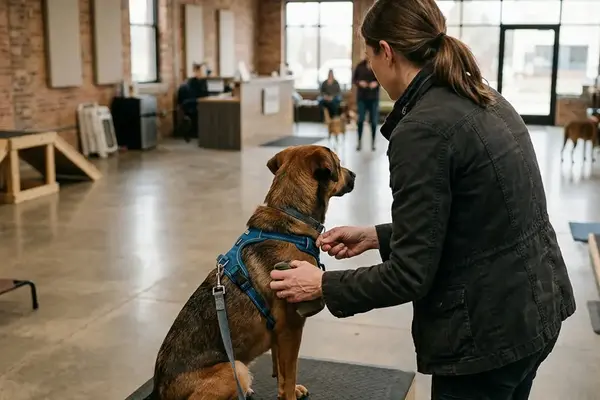
Consider a guardian walking a two-year-old leash-reactive mixed-breed at dusk. She listens to three or more dog podcasts each week. She knows the vocabulary, saves many episodes, and still feels stuck.
Here is the 28-day plan she can follow exactly.
Week one: audit the listening
- Write down every episode played during the week.
- Beside each title, record one takeaway.
- Mark whether that takeaway was tried with the dog.
At the end of the week, her notebook shows that zero ideas were tested. She treats that as a baseline. There is no scolding and no attempt to catch up over the weekend.
Week two: narrow the voices
- Unsubscribe from two shows.
- Keep the host whose tone lowers her shoulders and makes the next step clear.
- Choose one concept: measure the distance at which the dog can still eat a treat near another dog.
- Record that distance on three separate dusk walks.
She avoids moving closer to manufacture progress. Her job this week is observation. The notebook begins to replace guesswork.
Week three: repeat one small test
- Use the same route and carry the same treats.
- When another dog appears, move to the previously recorded eating distance.
- Offer the treat, create space, and let the dog resume sniffing.
- Record the post-trigger recovery time in exact seconds.
- Use one 20-minute yard sniffing session to practice the same cue without a nearby dog.
She listens only during the drive home. During the walk, her ears and attention stay with the dog.
Week four: keep what the dog answered
- Review the right-hand column of the listening log.
- Circle the walks where the dog could eat and return to sniffing.
- Keep the distance-setting routine that produced those responses.
- Write one plan for the next dusk walk: spot the dog, cross early, feed at the recorded distance, retreat, and time recovery.
On day 28, she queues one Tuesday episode for the drive, packs the notebook and treats, and leaves at dusk. At the first trigger, she crosses before the leash tightens, reaches the distance where her dog has eaten on prior walks, offers a treat, then moves away and starts the timer. When the dog resumes sniffing, she records the recovery time in the right-hand column. One voice supported the guardian; one measured action supported the dog.









Leave a Comment