
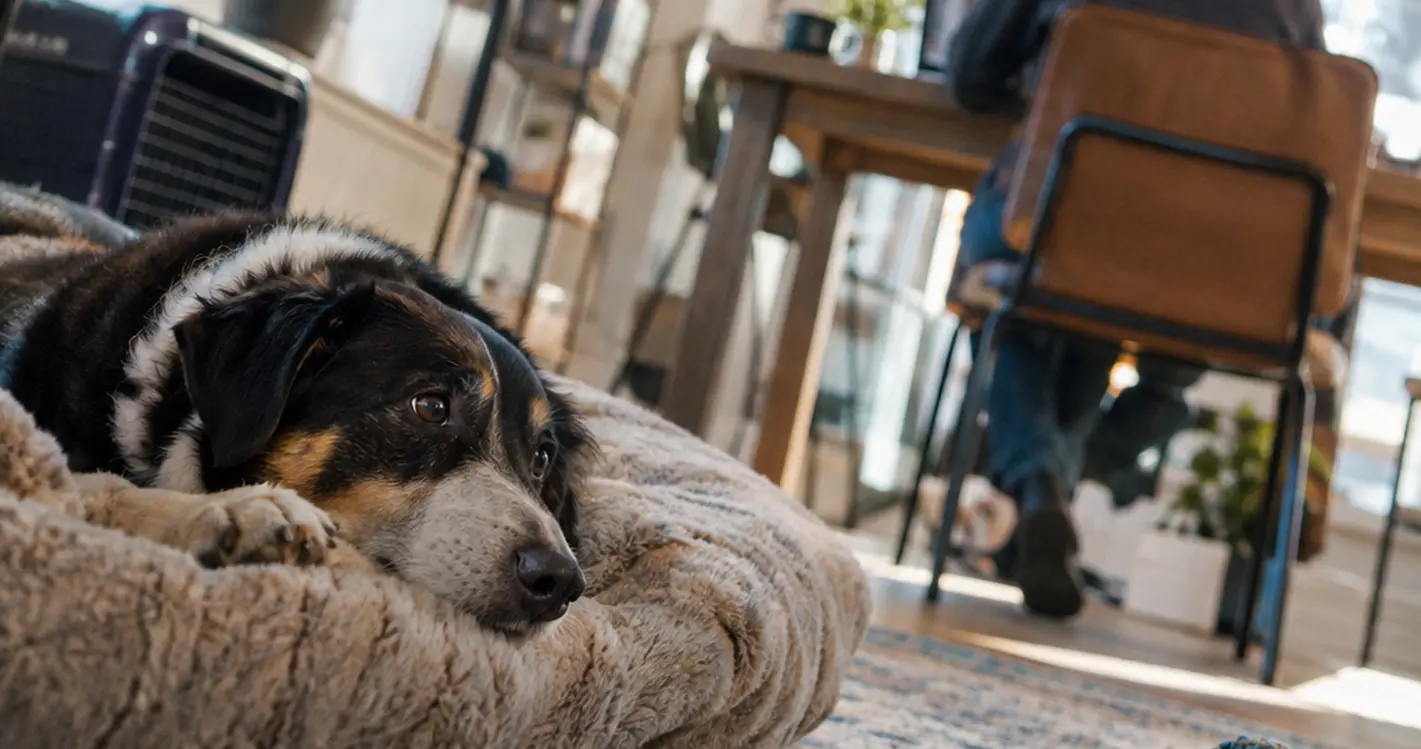
What Rides on the Hours After a Reactive Episode
Misjudging post-episode recovery time sets up the next outing for failure before the front door even opens. Stepping out for a second walk within 3 to 6 hours of a severe morning lunge often catches the dog while internal arousal remains elevated, triggering outbursts at distances they normally handle. When a dog begins a walk still running hot, minor environmental shifts provoke disproportionate reactions. This erodes recent training progress and compounds the guardian's sense of defeat.
Accurately measuring the return to baseline alters this trajectory. Tracking recovery signals replaces guesswork and guilt with observable behavioral data. Guardians gain calmer subsequent outings, fewer surprise setbacks that seem to materialize out of nowhere, and a structured framework for deciding when to train and when to rest.
Navigating new dog parenthood alongside reactivity places a heavy load on the human half of the leash. Shaky hands, a racing heart, and mentally replaying the outburst on the walk home are normal physiological responses to a high-stress event. Protecting pet parent wellbeing requires treating both nervous systems—canine and human—as interconnected components of the recovery equation.
Inside Your Dog's Body After the Lunge and Bark
A reactive outburst initiates a two-phase physiological cascade that dictates how long a dog remains primed for conflict. The first phase is the rapid sympathetic nervous system surge, where adrenaline drives an immediate spike in heart rate, respiration, and muscular tension. Sympathetic indicators like a racing pulse and piloerection recede shortly after the trigger leaves sight, while circulating glucocorticoids keep startle thresholds lowered across the rest of the day's routine.
The visible storm passes long before the water settles. A dog who stops barking and walks on a loose leash has completed the fast sympathetic phase, yet their neuroendocrine system remains flooded with slower-clearing stress hormones like cortisol. Equating the end of vocalization with a full return to baseline leads guardians to resume obedience drills or navigate busy sidewalks while the dog is biochemically unprepared to process new information.
This prolonged hormonal wash creates the mechanical foundation for trigger stacking. When smaller stressors—a slammed car door, a delivery truck, a tight hallway pass—land before those circulating glucocorticoids clear, each new event adds to the existing internal load. By late afternoon, a mild stimulus that the dog would normally ignore breaches the lowered threshold, producing an explosive reaction that appears detached from the immediate environment. However, observational baseline tracking breaks down when underlying physical discomfort—such as undiagnosed osteoarthritis, gastrointestinal flares, or ear infections—continuously feeds internal stress signals regardless of outdoor triggers.
Return-to-Baseline Signals Worth Writing Down
Quantifying recovery requires establishing what the individual dog looks like when completely unbothered. Spend 3 to 4 trigger-free days documenting your dog's unbothered habits—such as how softly they take a low-value kibble piece or how long they sustain a ground sniff—before attempting to score post-episode recovery. Once that foundational reference exists, post-outburst observations split cleanly into active recovery indicators and true baseline behaviors.
Still Recovering Indicators
- Visual hypervigilance: Scanning the horizon continuously with stiff head turns and an inability to break fixation on distant movement.
- Thermoregulatory panting: Wide, rapid panting with a spatulate tongue occurring in cool temperatures without rigorous physical exertion.
- Oral and facial tension: A tightly closed mouth, pulled-back commissures, dilated pupils, or hard brow ridges.
- Motor restlessness: Pacing hallways at home, shifting weight repeatedly, or failing to transition into a recumbent rest posture.
- Appetite suppression or rough prehension: Turning away from high-value treats, spitting food out, or snapping hard at fingers when taking a reward.
- Exaggerated startle response: Flinching, barking, or spinning at minor household acoustics like a dropped spoon or a floorboard creak.
Back-to-Baseline Indicators
- Sustained olfactory engagement: Lowering the head to investigate scents thoroughly without snapping upward to check the perimeter.
- Muscular softening: A loose, fluid spine, soft eyes with normal blink rates, and neutral ear carriage.
- Gentle food acceptance: Taking kibble or treats with soft lips and methodical chewing.
- Cognitive availability: Orienting promptly when their name is called and offering spontaneous check-ins during movement.
- Voluntary behavioral transitions: Choosing to initiate play with a toy or settling into deep, lateral sleep at home.
- Routine home maintenance: Displaying standard appetite at mealtime and sleeping through normal neighborhood noises.
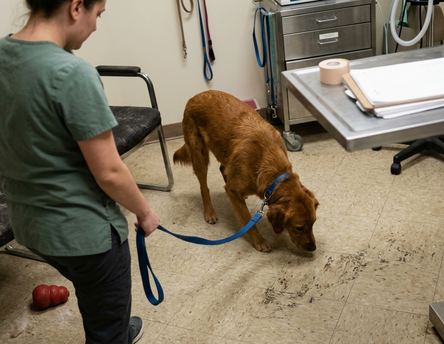
Effective reactive dog support relies on separating the first sign of decompression from complete systemic recovery. A true baseline sniff involves rhythmic nostril flaring and a lowered head carriage lasting 5 to 10 seconds, whereas displacement sniffing looks frantic, shallow, and snaps upward at minor ambient sounds. That initial 5-to-10-second rhythmic sniff marks Timestamp A: the moment the sympathetic surge recedes enough for the dog to process sensory input on the walk. Timestamp B occurs much later at home, marking the point when the dog settles into normal evening routines, eating and resting without startle responses. Logging both timestamps captures the full arc of recovery.
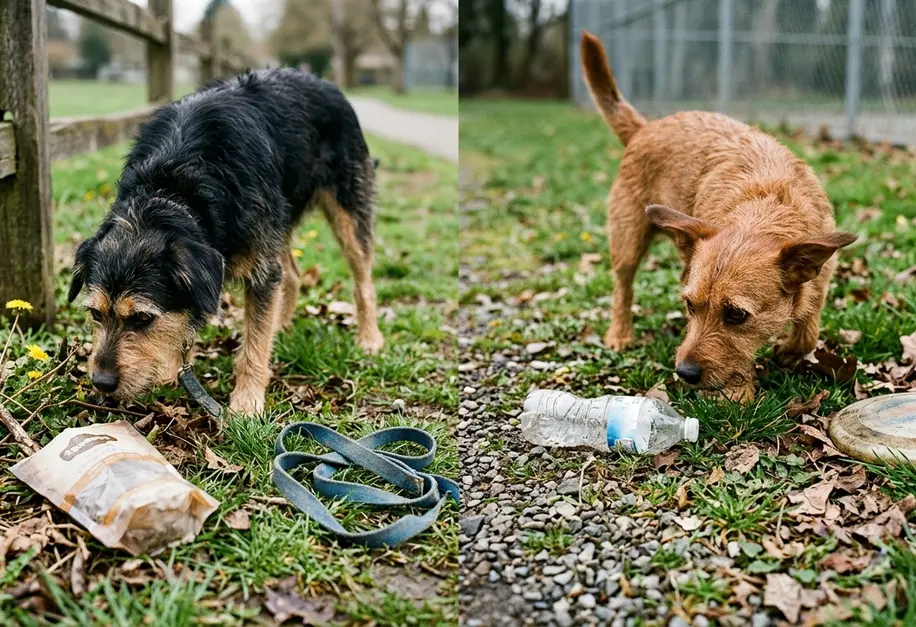
Minutes, Hours, or Longer: Four Recovery Patterns Compared
Reactive episodes follow distinct recovery trajectories depending on trigger intensity, exposure duration, and the dog's underlying stress load. Measure trigger proximity using everyday street landmarks—such as the width of a standard two-lane residential street (roughly 25 to 30 feet) versus a single driveway apron—to standardize how distance alters the recovery category. Categorizing each event into one of four qualitative patterns clarifies whether a dog snapping at home hours later is experiencing delayed physiological spillover.
| Recovery Pattern | What It Looks Like | What to Watch For | How to Plan Around It |
|---|---|---|---|
| Pattern 1: The Quick Rebounder | Displays a loose body and sustained ground sniffing within the same walk, shortly after gaining distance from the trigger. | False confidence that leads the handler to immediately test the dog near another trigger on the way home. | Maintain wide management buffers for the remainder of the outing; resume normal training & play schedules the next day. |
| Pattern 2: The Slow Settler | Remains wired, scanning, and pulling for the rest of the walk, with pacing and hypervigilance extending into the afternoon at home. | Secondary outbursts directed at minor triggers (bicycles, noises, delivery carriers) during the post-walk window. | Cancel structured afternoon training; convert the evening walk into a brief, quiet potty break away from high-traffic routes. |
| Pattern 3: The Delayed Spillover | Walks home appearing quiet and compliant, then exhibits resource guarding, barrier frustration, or startle barking indoors that evening. | Misinterpreting the quiet walk home as full baseline and exposing the dog to household guests or rough play later that night. | Provide quiet crate or pen decompression immediately upon returning home; enforce low-stimulation household rules for the evening. |
| Pattern 4: The Cumulative Drag | Recovery stretches across multiple days following back-to-back episodes, characterized by chronic restlessness, disrupted sleep, and immediate hair-trigger reactions outdoors. | Digestive upsets, refusal to put on walking gear, or a steadily shrinking threshold distance over consecutive days. | Halt standard neighborhood walks for 24 to 48 hours; rely exclusively on indoor enrichment and stationary backyard relief. |
Building a Simple Post-Episode Recovery Log
A comprehensive 12-column spreadsheet can feel like too much to keep up with right after a stressful outing. Shrinking the entry to a structured six-point phone note or pocket notebook entry makes it easier to keep logging when emotions run high. Cap active data entry at 45 to 60 seconds right inside the front door, waiting to fill in the full-baseline timestamp and next-day appetite notes until the following morning's coffee.
- Record the environmental anchor: Write down the date, time of day, specific trigger category (e.g., off-leash dog, skateboard, jogging stroller), and approximate distance using consistent street landmarks like driveway widths or parked car lengths.
- Score the reaction intensity: Anchor your personal 1-to-5 intensity scale to physical mechanics: 1 means ear-pinning and hard staring with slack in the leash, 3 means sustained barking with forward tension, and 5 means spinning, lunging, and complete inability to orient toward food or voice.
- Log Timestamp A (Initial Decompression): Note the exact number of minutes elapsed between the end of the trigger exposure and the dog's first sustained 5-to-10-second rhythmic ground sniff or soft food take on the pavement.
- Log Timestamp B (Full Home Baseline): Record the time later that day when the dog demonstrates complete systemic settling indoors, evidenced by deep lateral sleep, loose posture, and unbothered reactions to ambient household sounds.
- Note next-day behavioral carryover: During morning coffee the following day, add a brief line detailing overnight sleep quality, morning meal enthusiasm, and any hesitation when approaching the front door.
Podcast Takeaway: Dual-Timestamp Tracking
Splitting recovery into two distinct metrics—initial pavement decompression (Timestamp A) and full indoor settling (Timestamp B)—prevents guardians from mistaking a quiet walk home for a fully reset nervous system.
Your Nervous System Needs a Cool-Down Too
A reactive episode triggers a parallel sympathetic surge in the guardian, flooding the human body with adrenaline, cortisol, and the cognitive weight of social embarrassment. When a handler ruminates on the outburst or scans the street in dread of the next encounter, muscular tension in the shoulders and hands travels directly down the leash. That mechanical tension cues the dog that the environment remains unsafe, prolonging the recovery window for both parties. Recovery logs from reactive dog support cohorts also describe this two-way tension.
Interrupting this feedback loop requires a deliberate physiological reset before stepping back into the household routine. Pause on the porch or inside the entryway for 30 to 45 seconds to execute three slow, extended exhales and unclench your fingers from the leash handle before removing the dog's harness. While out on the route, use the dog's Timestamp A sniffing window to conduct a rapid physical body scan: drop the shoulders away from the ears, soften the knees, and let a loop of slack form in the webbing.
Cognitive reframing stops the spiral of self-blame that erodes consistency in new dog parenthood. Replace internal critiques with a neutral, factual observation: Both of our nervous systems took a hit, and our only job right now is to get home and decompress. To make this visible over time, add a single-word human mood line at the bottom of the recovery log entry (e.g., shaky, frustrated, steady, exhausted). Tracking human bandwidth alongside canine recovery highlights when the guardian also requires a lighter management day.
Turning Logged Recovery Times Into Kinder Walk and Rest Plans
Logged timestamps only serve the dog when they directly govern the next day's schedule. Removing the daily willpower battle over whether to push through a neighborhood walk or retreat to a quiet space protects both training momentum and household sanity. Use the time gap between the outburst and Timestamp B (Full Home Baseline) to select the appropriate management protocol:
- Decompression walks after slow recoveries: Swap neighborhood sidewalks for a 15-to-20-foot biothane long line in an empty industrial park, cemetery perimeter, or open field whenever the previous day's log shows more than 2 hours between the episode and full home baseline. Allow the dog to dictate pace and direction through uninterrupted sniffing.
- Scheduled rest days after stacked clusters: Substitute 15 to 20 minutes of indoor shredding, scatter feeding, or lick-mat work for standard street walks for 24 to 48 hours following a Pattern 4 cumulative-drag cluster. Keeping the dog out of the neighborhood prevents reheating a nervous system that has not yet cleared the previous day's hormonal load.
- Pausing formal training cues: Suspend structured heelwork, duration sits, and counterconditioning setups near triggers until the log confirms the dog has returned to full indoor baseline. Practicing cues while the dog is still recovering poisons the cues with residual stress and degrades response reliability.
Longitudinal logs also surface anomalies that require clinical intervention rather than schedule adjustments. If a dog's logged recovery times suddenly lengthen without a change in trigger proximity, if baseline never seems to return indoors, or if the dog shows reluctance to climb stairs or jump onto furniture, pause behavior tracking and schedule a comprehensive veterinary pain evaluation. Discard any baseline time-lag calculations when undiagnosed physical pain—like a gut flare or joint ache—is secretly replenishing the dog's stress bucket indoors. Once medical contributors are ruled out or treated, partnering with a certified behavior consultant allows you to calibrate threshold distances and reinforcement mechanics to your dog's physical needs.
After your very next reactive episode, open a note on your phone and capture just two numbers: the exact time of the first sustained 5-to-10-second rhythmic ground sniff on the walk, and the time your dog settles into deep, unbothered rest at home that evening. Calculate the gap between the outburst and that second indoor timestamp, and if it exceeds 2 hours, cancel tomorrow's neighborhood sidewalk route in favor of a quiet decompression walk or indoor enrichment session.









Leave a Comment