
Trigger Stacking: When Small Stressors Add Up
Trigger stacking is the cumulative effect of stressors arriving before a dog has recovered from the last one. A skateboard may be manageable by itself. Add a doorbell frenzy, a vet visit, poor sleep, and a leashed dog passing at just about 12 feet, and that same skateboard can tip the whole system over.
The mechanics matter because they take the moral judgment out of the reaction. Stress hormones rise faster than they clear after a major event, and full recovery may take days. The dog who watched a skateboard quietly on Tuesday may lunge at one on Saturday because Saturday began with a fuller stress load.
This often feels personal to the human holding the leash. A rough walk can stir embarrassment, anger, or the fear that training has somehow disappeared. The more useful reading is physiological overload: the dog had less capacity available when the trigger arrived.
Saturday Makes Sense
A reaction after several hard days does not erase earlier progress. Reduce incoming pressure and give recovery enough time to catch up.
Your Dog’s Threshold Moves Throughout the Day
Threshold is the point where a dog loses the ability to eat, answer a familiar cue, or disengage from a trigger. It moves hour by hour.
Poor sleep can lower it before breakfast. So can hunger, heat, houseguests, an itchy skin flare, pain, a schedule change, or a missed walk. This explains why measuring threshold by one fixed distance quickly becomes frustrating.
Turn Three Environmental Dials
- Distance: A dog in the range of 50 feet away may remain available to you; at 12 feet, the same dog may feel overwhelming.
- Duration: Three seconds of watching can stay manageable while 30 seconds creates a slow climb toward reaction.
- Intensity: A quiet dog standing still carries less pressure than one barking and pulling toward you.
Adjust whichever dial you control fastest. Cross the road to create distance, move behind visual cover to shorten duration, or choose a quieter route to reduce intensity.
Distance work assumes physical comfort is holding steady. A sudden, uncharacteristic threshold drop deserves veterinary pain screening before you keep changing training variables.
The Quiet Signals Before the Bark
The best exit usually happens before barking starts. Watch first for slowed sniffing, a lip lick, whale eye, or a mouth that closes tightly for a second or two. Sudden scratching and shaking off while dry can also mark rising tension.
Food gives useful information. Refusing a treat your dog usually loves means the environment may already be demanding too much. Repeating the cue or presenting better food rarely solves the load underneath.
Read Posture and Pace
- A stiff gait or abrupt freeze
- Weight shifted forward
- A tail carried unusually high or clamped low
- Ears pinned back
- Panting without heat or exertion
The pattern can begin indoors. Pacing, startling at ordinary sounds, odd-hour zoomies, trouble settling, and resource guarding that appears only on difficult days all belong in the same picture. One signal may mean little. Several signals close together should change the day’s plan.
Move On Quiet
Create distance at the tight mouth or food refusal. Waiting for the bark leaves both dog and guardian with fewer choices.
A Trigger Log You Will Keep Using
Complex spreadsheets tend to die after a few entries. I prefer a dictated phone note completed while the details are still fresh.
Use five fields for every incident:
- Time of the encounter
- Trigger your dog noticed
- Distance from that trigger
- Reaction on a simple 1–5 scale
- Recovery time before normal behavior returned
Add three context fields when you can: sleep the night before, notable events during the previous 48 hours, and weather or noise conditions. These are the columns guardians often skip, yet they explain why two apparently identical walks produce different outcomes.
After 14 consecutive days, look for clusters rather than isolated explosions. Sunday afternoons may run hot. The second walk may be harder than the first. One block may repeatedly combine narrow sidewalks, a fenced dog, and traffic noise.
The log also protects pet parent wellbeing. It replaces the foggy thought that “everything is getting worse” with specific moments you can reroute, shorten, or discuss.
Recovery Days Built Around Sleep and Sniffing
Recovery costs time. One nap after a loaded outing may leave plenty of arousal in the system, especially when several hard days have landed back to back.
For a heavily stacked dog, create a complete trigger holiday lasting several quiet days when your circumstances allow. Drop busy sidewalks, greetings, visitors, and ambitious training sessions. Choose low-pressure training & play instead:
- A long-line sniff walk in a quiet field
- Scatter feeding through grass
- Licking or chewing activities at home
- A dim resting room with steady white noise
- Short toilet outings at low-traffic times
Adult dogs need a great deal of daily sleep, and reactive dogs often lose rest during stacked weeks. They wake at hallway sounds, patrol windows, or remain alert after the household settles. Protecting sleep may do more for the next walk than adding another round of physical exercise.
Deliberate boredom can feel uncomfortable when you are eager to help. Give it a job title: nervous-system recovery.
Rescue Plans for a Day Already Going Sideways
Decide your exits while everyone is calm. Practice a 180-degree U-turn indoors and on easy streets. Rehearse crossing early, stepping into a driveway, and ducking behind a parked car so those movements feel ordinary when pressure rises.
Route triage helps too. Keep three routes in mind: a quiet route with generous sight lines, a neutral everyday route, and a route you skip on hard days. This removes a decision from the exact moment your own nervous system is spiking.
Use the Five-Minute Test
During the first five minutes, offer food in a low-pressure spot and watch how your dog moves. Food refusal paired with scanning, stiffness, or frantic pace is enough reason to call the walk. A toilet break followed by rest still counts as responsible care.
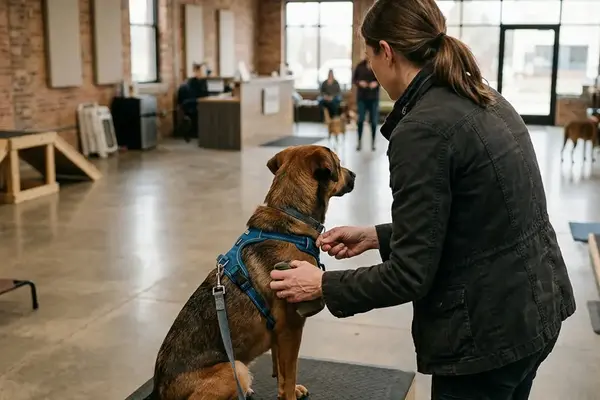
Equipment should buy time and distance. A well-fitted harness with two attachment points can add security, while a long line belongs in open spaces where it will not wrap around people or street furniture. Load the treat pouch before clipping the leash. For broader guidance on humane behavior practices, review the AVSAB position statements.
Leave Before Loud
Ending a walk early protects the next walk. Completing the planned route is never worth pushing a loaded dog through another trigger.
Start Your Dog’s Two-Week Stack Map Tonight
At day 14, circle the two clusters that appear most often. Remove or reroute one cluster for the following week, then watch whether recovery becomes faster and reactions soften.
Bring the log to your veterinarian or a credentialed behavior professional if reactions are escalating, safety is narrowing, or pain may be involved. “He is reactive” offers a broad label. A dated record of triggers, distances, intensity, and recovery gives them something concrete to act on.
Open a note on your phone now, title it with your dog’s name, and enter these five headings: time, trigger, distance, reaction 1–5, and recovery time. Fill in the first line after tonight’s last toilet break, even if the entry reads “9:40 pm, no triggers, calm, settled fast.” Those quiet lines are the baseline you will compare every hard Saturday against.










Leave a Comment