
What a Ship’s Log Can Teach Us About Hard Dog Days
Working ships crossed oceans with remarkably terse records. A deck log captured the heading, wind, sea state, and a short observation for each watch. Someone wrote the entry whether the crossing was calm or miserable.
Behavior records follow the same useful discipline. They separate what happened before an incident, what the dog did, and what followed. “A dog appeared around the corner; mine barked and lunged; he took food again after we crossed the street” preserves information. “He was terrible today” preserves the feeling, then pins it to the dog’s character.
That distinction matters during reactive dog support. A difficult walk can flood the nervous system of the person holding the leash. By evening, one loud encounter may feel larger than every quiet choice the dog made earlier.
I reached for a long, feelings-heavy diary during an exhausting first week of reactivity. It collapsed within days. The nights when I most needed a record were the nights when I had nothing left to write. The replacement borrowed from the deck-log model: three lines, observable details, finished quickly.
Record the Crossing
Your entry does not need to explain the whole dog. It only needs to preserve enough of today for tomorrow’s tired brain.
This small habit supports both training and pet parent wellbeing. The page holds the details so the guardian does not have to rehearse them all night.
Put the Log Where the Leash Comes Off
The best format is the one you can complete while standing up in under 120 seconds. Test that requirement before the hard week arrives.
Three formats worth considering
- Index cards in a tin: fast, tactile, and easy to spread across a table during review. Standard 4x6-inch cards leave enough room for three lines without inviting an essay.
- One pinned phone note: always nearby, though it competes with messages, alerts, and the temptation to scroll after a tense walk.
- A wall calendar: visible to everyone who walks the dog, but cramped when a trigger needs context.
Use three selection tests. The record must be writable in under two minutes, reachable without searching or unlocking anything, and fully tolerant of missed days.
Placement usually matters more than stationery. Keep the log beside the leash hook, inside the treat-pouch drawer, or taped to the inside of a cupboard at eye level. Choose the place where the walk actually ends. Timestamp each entry rather than writing “morning” or “evening.” A 6:40 a.m. walk and a 9:15 p.m. walk can expose very different patterns in traffic, neighborhood dogs, and guardian energy.
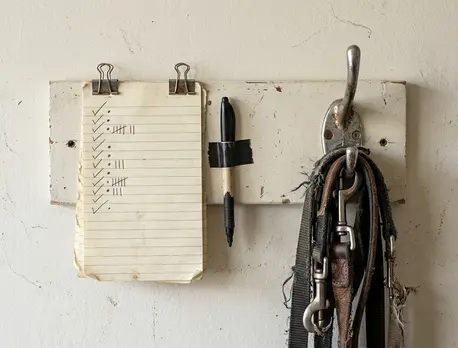
For a paper setup, write the time before leaving. Add the remaining lines after the harness comes off. That tiny first action makes the card easier to finish when the return home feels ragged.
Three Lines Separate the Trigger, the Dog, and You
The three-line leash-hook index card protocol works because each line has one job.
- Conditions: Record the time, weather, route, number of dogs passed, and the closest distance at which your dog noticed one. Estimate in paces or metres. “About 40 paces” is useful; surveying equipment is unnecessary.
- One observable win: Use verbs a stranger could have filmed. Try “turned away on his own,” “took the cheese outdoors,” “lay down in the hallway before the bus,” or “slept for upward of two hours after.”
- One line about me: Note what your hands, voice, shoulders, or breathing did. “I loosened my grip after we crossed” gives you more to work with than a broad judgment about confidence.
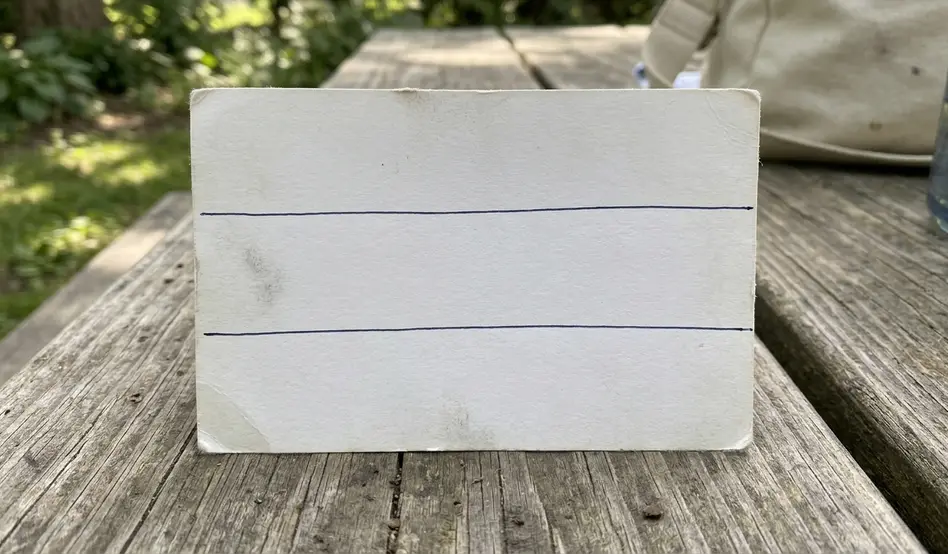
The personal line stays deliberately short. Anxiety can turn journaling into another place to circle the incident. One sentence acknowledges the guardian’s experience without letting the entry become an overnight investigation.
Measure recovery in seconds
When possible, record how long it took the dog to take food again after a trigger. Recovery seconds often reveal movement before the visible outbursts change. A dog may still bark, yet regain enough regulation to eat sooner.
This is where distinguishing observable recovery seconds from subjective character adjectives pays off. “Took cheese after just over 12 seconds” can be compared with a later entry. “Stubborn and wild” cannot guide the next walk.
Filmable Verbs Win
If an imaginary camera could capture the action, the wording belongs in the log. If the phrase guesses at motive or personality, replace it with what eyes and ears detected.
Seven Entries Make One Bad Walk Smaller
Here is a chronological week. Each entry keeps conditions, the dog’s action, and the guardian’s line close together. The quiet days receive space too.
Day 1: Departure
7:10 a.m.; dry; quiet cul-de-sac; one dog at roughly 40 paces.Noticed the dog and looked back at me without being asked.I held the leash loose for the first time in days.
Day 2: Fog
No dogs; no data.Ate breakfast in the garden.I wanted something impressive to record, then let boring count.
Day 3: Storm
6:05 p.m.; storm event.The entry records the event in observable terms and leaves room for recovery details.I wrote three lines before replaying the walk in my head.
Day 4: Blank
The card stays empty. No reconstruction, apology, or Sunday guesswork gets added later.
Day 5: Recovery
Walk conditions recorded at the door.Turned away on his own and took food after not far from 12 seconds.My shoulders dropped when he ate.
Day 6: Choice
Time, weather, route, and distance recorded.Turned away on his own.I used fewer words and gave him room.
Day 7: Another repetition
Conditions first, without a walk score.Turned away on his own.I noticed the choice before judging the rest of the walk.
Placed together, the week changes the emotional scale. The storm remains real. So do the uneventful breakfast, the loose leash, the 12-second recovery, and three appearances of “turned away on his own.” An isolated incident no longer has to carry the entire story.
Read the Week From Sunday Back to Monday
Review the last seven entries in reverse order, newest first. This puts the most recent handling choices and recovery evidence in view before you reach the oldest disappointment.
- Lay out seven cards or open the seven most recent entries.
- Begin with the newest entry.
- Underline only actions the dog performed independently.
- Count appearances of each verb without grading their quality.
- Compare recovery times where they were recorded.
Three instances of “turned away on his own” within seven days form a useful trend. The moments may have looked messy. Frequency still tells you that the behavior is available to the dog and deserves room to happen again.
Recovery time deserves special attention. Guardians often miss a shorter recovery because the bark or lunge still happened. Exact seconds reveal that the dog returned to eating sooner, even while the dramatic part of the encounter remained visible.
Risk Leaves the Log
This record serves as a morale and memory aid. Sudden behavior changes, escalating bite risk, or suspected pain call for veterinary assessment rather than more journaling.
After review, choose one practical adjustment for the coming week: a different departure time, more distance on a particular route, or an easier decompression walk after a crowded outing. Keep the decision narrow enough to test.
Protect the Two-Minute Boundary
Logs tend to grow. A weather note becomes a paragraph, then a walk rating, then a private obligation that follows the guardian around the house.
Drop the streak
Once an unbroken chain becomes the goal, the log starts serving itself. Mark a missed day with a dash or leave the card blank. Continue with today. Back-filling three days from memory on Sunday produces a tidier record and weaker information.
Keep scores off the card
A “4/10 walk” compresses trigger distance, recovery, environment, and human stress into one discouraging number. Use zero numeric ratings. Numbers belong to observable details such as time, distance, and recovery seconds.
Stop prompt creep
Hold the line at three entries. Archive the cards after 28 days and begin a fresh set. That rhythm keeps the tin from becoming a permanent monument to difficult walks.
The log should feel easy to approach during new dog parenthood, including weeks when training & play plans fall apart. Journaling & resources help most when they lower the burden of remembering rather than creating another standard to meet.
Copy This Terrier Log From Tin to Sunday Review
Use this setup for a two-year-old terrier mix who reacts to dogs at close range. The guardian works from home, walks him twice daily, and is entering a rough week of neighborhood building work.
- Prepare the container: Put 10 standard 4x6 index cards and one pencil in a mint tin.
- Choose the landing spot: Place the tin on the shelf directly above the leash hook.
- Write the prompts inside the lid: “Time, weather, route, closest dog and roughly how far”; “one thing he did himself”; “one line about me.”
- Start before the walk: Take one card and write the date and exact time.
- Finish after the walk: Return the harness to its hook, then complete the other three lines while standing there.
- Leave missed days alone: Keep the card blank instead of rebuilding the walk from memory.
- Review on Sunday: Read the week backward, underline independent actions, and compare any recovery seconds.
One card reads: “Building work; usual route; dog appeared at close range. Turned away on his own and took food after shy of 9 seconds. I stepped aside early and kept my voice quiet.”
On Sunday, the guardian finds that the calmer entries occurred earlier than the busiest neighborhood activity. The next week’s first walk moves exactly 30 minutes earlier. Before bed, the guardian dates tomorrow’s card, returns it to the top of the tin, and leaves the pencil across the lid above the leash.









Leave a Comment