
The Harness Comes Down. Your Dog Disappears.
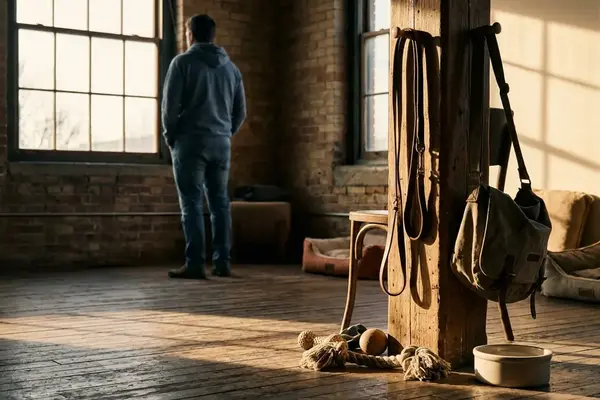
You lift the harness off its hook by the door. Your dog slips under the kitchen table, turns their head away, and waits. The walk hasn't started, and both of you are already tense.
That moment can sting, especially when you've rearranged your morning to give your dog a good outing. Your dog is trying to manage something that feels unpredictable. You're trying to get through an ordinary task. Neither of you deserves blame.
Cooperative care microgames give handling a clearer beginning, pause, and finish. Each game lasts a minute or two, with room for your dog to opt in and leave. That choice can help touch feel safer over time.
The useful benchmark is simple: does your dog willingly return for another turn? Getting the harness fastened or every paw touched can wait.
Before Touch Practice: Check for Pain and Establish a Pause
If your dog suddenly dislikes touch they previously tolerated, book a veterinary visit before training. Sore joints, a split nail, ear trouble, or irritated skin can make ordinary handling hurt. Practice cannot resolve a medical problem.
When Hands Must Stop
These games cover everyday handling tolerance. Growling, snapping, biting, or hard freezing during touch calls for veterinary assessment and direct behavior support rather than solo practice. Stop if lifting the harness produces a rigid body and hard, glassy stare.
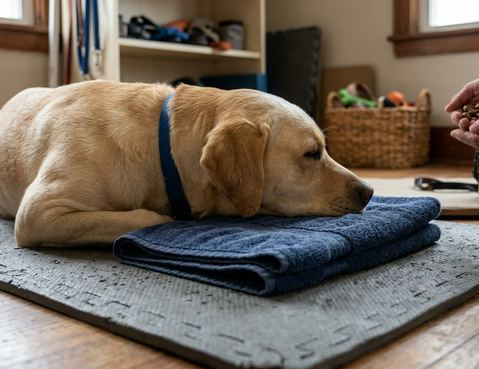
Next, establish a start button: a position your dog offers to indicate readiness. A chin resting on a folded towel works well. Standing on a mat is another option. When your dog breaks that position, your hands stop; you don't follow or coax them back.
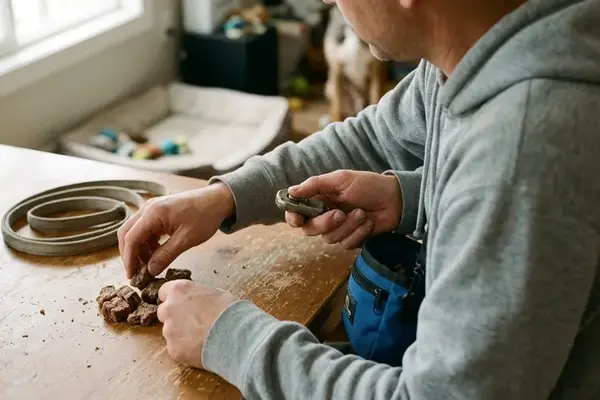
Prepare small, soft treats your dog can comfortably eat. Allow time to swallow and choose another turn between repetitions. Finish with a consistent “all done,” step back, and scatter a couple of treats on the floor. Keep the ending as predictable as the beginning.
Games 1–3: Give Paws a Predictable Introduction
Game 1: Chin Rest Station
Place a folded towel or cushion where your dog can reach it comfortably. Reward voluntary interest, then contact with the chin. Keep food away from the towel between turns so your dog can leave freely.
Start with a brief chin rest and build toward a few comfortable seconds across separate sessions. If the chin lifts, your hand leaves. This becomes the start button for later handling; don't add paw touch while your dog is still learning it.
Game 2: Paw on the Mat
Lay a textured mat or towel flat on the floor. Reward your dog for voluntarily placing a front paw on it. Leave your hands away from the foot.
A floor target keeps the dog's weight grounded and lets them present a paw without placing it in your palm. Skip the familiar “shake” cue here if offering a paw usually ends with your dog pulling away.
Game 3: One-Toe Count
Once the chin rest is comfortable, briefly touch one toe while the chin stays down. Deliver a treat, withdraw your hand, and pause. If the chin lifts during your approach, stop before touching.
Keep the first version that small. Later sessions can introduce a second toe, then a light hold, and eventually nail clippers resting nearby. Change one element at a time so you can see which part affects your dog's comfort.
Games 4–5: Let the Brush Announce Something Good
The order matters here: brush first, food second. That sequence gives the brush a chance to predict something pleasant. Showing food and then bringing out the brush can make the treat pouch itself a warning.
Game 4: Brush Appears, Treat Arrives
Bring the brush into view at a comfortable distance, deliver a treat, then put the brush out of sight. Keep it away from your dog's coat throughout this game.
Look for an easy, interested response when the brush appears. Turning away, backing up, or becoming still tells you to reduce the intensity: increase distance or make the appearance briefer.
Game 5: Two Strokes and a Snack
With your dog offering their start button, give one or two light strokes over a comfortable area, such as the outer shoulder. Follow with a treat, remove the brush, and pause.
Wait for your dog to offer the chin rest again. Save the tail base and back-leg feathering for later. If the brush appears comfortably but contact causes withdrawal, return to the appearance-only game rather than squeezing in a quick grooming session.
Games 6–7: Separate the Harness Loop From the Buckle
Fabric moving past the ears and a plastic buckle snapping near the ribs are different experiences. Practice them separately so your dog has less to process in each turn.
Game 6: Head Through the Loop
Hold the harness opening still at nose height, a short distance in front of your dog. Offer a treat just beyond the opening so your dog can choose to move their nose toward it or through it.
Keep the harness hand stationary. Never pull the loop over their head or advance it while they're eating. Let them withdraw freely; if they back away, lower the harness and wait. Start with smaller voluntary approaches if moving through feels too difficult.
Game 7: Buckle Click Countdown
Begin with the harness off your dog. Muffle a buckle click inside a coat pocket or make the sound behind your back, then deliver a treat.
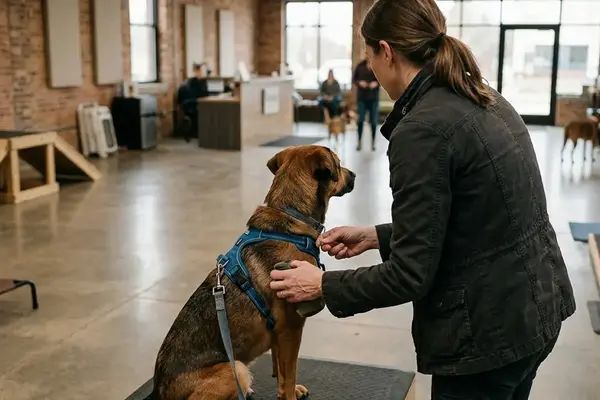
Bring the sound closer gradually across sessions, watching for flinching or withdrawal before progressing toward fastening. Keep the buckle clear of skin and fur. At the door, the eventual goal is a familiar invitation your dog can approach willingly.
When Your Dog Pauses, Let the Pause Count
A dog can ask for space without leaving the room. Watch for:
- A quick lip lick as your hand approaches.
- A head turn or visible whites of the eyes.
- A sudden floor sniff or backward weight shift.
- A shake-off, lifted chin, or departure from the mat.
Read these signals in context, especially when they follow your movement. Stop your hands and give your dog several quiet seconds. If they leave, let the session end. Hard freezing warrants stopping practice and arranging the support described above.
A pause gives you useful information: that repetition asked too much, or your dog has had enough. Honoring it makes the start button meaningful.
Grooming-day dread affects pet parent wellbeing, too. Keep these games light enough that you can finish without bracing for the next attempt. Short, predictable sessions leave room for both of you to breathe.
Your First Week Starts With the Towel
Choose only Chin Rest Station for the first week. Aim for one short session before dinner each day, with two minutes as the ceiling. End sooner whenever your dog opts out.
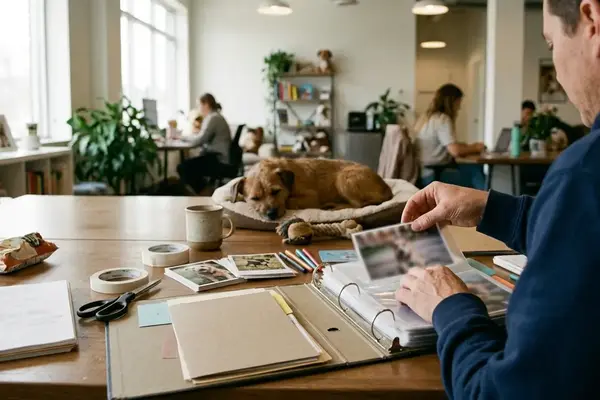
Keep a small note in your journaling & resources routine: what you touched, how long the comfortable chin rest lasted, and any pause signal. During this first week, “no handling added” is a useful entry. You're tracking voluntary participation.
If comfort drops or a new sensitive spot appears, stop increasing difficulty and arrange a veterinary check.
Tonight, fold a towel, prepare a few soft treats, and reward your dog's first voluntary chin rest before dinner.


Leave a Comment